High-Demand Wholesale Pet Food & Meat Jerky Offerings
Directly sourced from state-of-the-art export-certified facilities. Engineered for high palatability, structural stability, and regulatory compliance across EU, US, and Asia-Pacific markets.
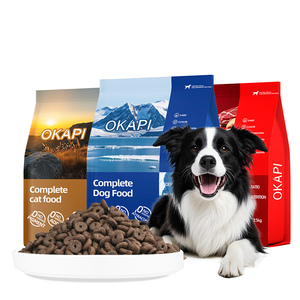
Nutritionally Balanced Complete Cat & Dog Food for Bulk Orders
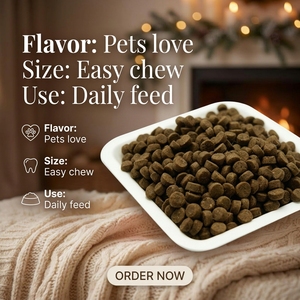
High Protein Chicken Freeze-Dried Coated Crisp Kibble Dog Food
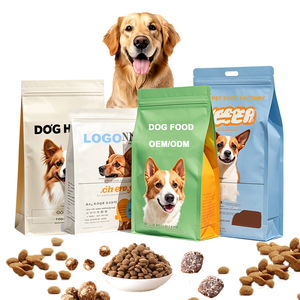
OEM Pet Dog Dry Food Wholesale Direct Sales Customization
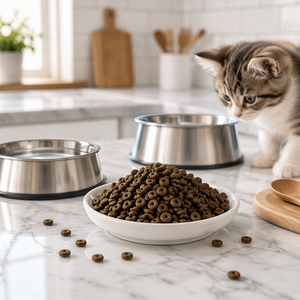
Mailushi Freeze-Dried Grain-Free Cat Food Salmon & Tuna
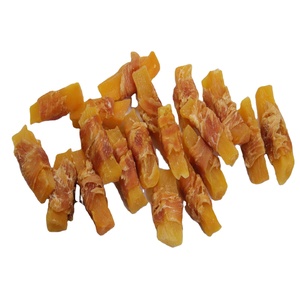
Natural Sweet Potato Wrapped with Chicken Meat Jerky Snacks
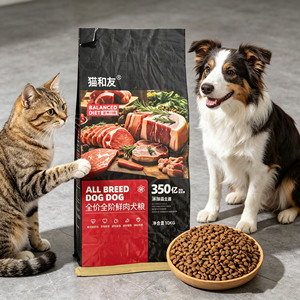
Bulk Commercial Pet Food Dry Kibble 18%-35% Protein 10kg Bag
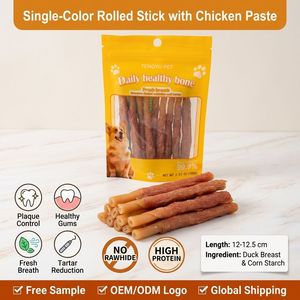
High Protein Duck Paste Coated Twisted Chews Rawhide-Free
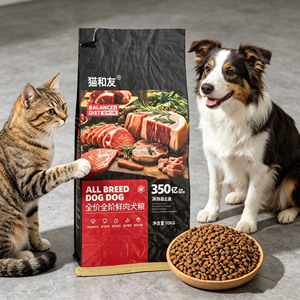
OEM/ODM Complete All-Life-Stages 18%-45% Protein Dry Food
1. Strategic Overview: China's Role in Global Meat Jerky & Pet Treat Manufacturing
Over the past decade, China has evolved into an irreplaceable global hub for pet food manufacturing, particularly within the specialized segment of dehydrated meat jerky, rawhide-free chews, and functional pet snacks. Leveraging advanced cold-chain agricultural integration, automated low-temperature thermal processing systems, and world-class quality management frameworks, premier Chinese manufacturers provide global brand owners with unprecedented cost-to-quality ratios, product consistency, and supply chain scalability.
For international B2B buyers—including brand owners, supermarket retail buyers, e-commerce conglomerates, and veterinary distributors—navigating the manufacturing landscape requires a deep technical understanding of raw material procurement, processing parameters, microbial reduction techniques, and regulatory documentation. Modern China meat jerky production is no longer merely about volume; it is governed by rigorous bio-security controls, precise water activity ($A_w$) management, and sophisticated customization options ranging from single-animal protein formulations to dual-textured freeze-dried kibble coatings.
2. Technical Deep-Dive: Manufacturing Processes & Quality Parameters
To ensure that dehydrated chicken, duck, beef, and seafood snacks achieve an optimal balance between extended shelf life and maximal nutritional retention, premier manufacturers adhere to strictly validated thermodynamic drying schedules. Understanding these technical parameters allows procurement managers to verify vendor expertise during site audits and quality control checks.
Thermodynamic Drying & Pathogen Elimination
Meat jerky undergoes multi-stage low-temperature dehydration (typically 65°C to 82°C for 6 to 10 hours). This precise thermal envelope induces a complete pasteurization effect against Salmonella spp., Listeria monocytogenes, and Escherichia coli while avoiding the denaturation of heat-sensitive amino acids such as lysine and methionine.
Water Activity ($A_w$) Control (<0.65)
Unlike raw moisture percentage (which measures total water weight), Water Activity ($A_w$) dictates the unbound moisture available for microbial proliferation. Top-tier China factories utilize digital dew-point water activity meters to guarantee an $A_w$ below 0.65, rendering artificial chemical preservatives unnecessary for achieving a 18-to-24-month ambient shelf life.
Maillard Reaction & Palatability Optimization
By carefully controlling humidity levels within steam-heated drying chambers, manufacturers optimize the natural Maillard reaction between meat proteins and endogenous carbohydrates. This develops an attractive, deep golden-brown visual appeal and intense natural aroma without scorching the tissue or producing toxic acrylamides.
Comparative Process Matrix for B2B Sourcing Decisions
When selecting product lines for your brand portfolio, understanding the structural, nutritional, and financial differences between various treat-manufacturing methodologies is critical for optimal positioning.
| Process Category | Moisture Range | Water Activity ($A_w$) | Nutritional Integrity | Ideal B2B Market Application |
|---|---|---|---|---|
| Hot-Air Dehydrated Jerky | 12% - 16% | < 0.65 | High (Preserves Native Proteins) | Premium Daily Chews & Treats |
| Freeze-Dried Pure Meat | ≤ 3% | < 0.30 | Exceptional (Zero Heat Exposure) | Super-Premium Toppers & Raw Diet Replacement |
| Rawhide-Free Dental Chews | 14% - 18% | < 0.70 | Moderate to High (Formulated) | Functional Oral Health & Long-Lasting Boredom Busters |
| Freeze-Dried Coated Kibble | ≤ 10% | < 0.60 | Balanced Complete Feeding | Mass Market Premium Everyday Staple Food |
3. Emerging Global Procurement Trends (2025–2030 Outlook)
As pet humanization accelerates globally, consumer preferences are shifting rapidly toward clean labels, veterinary-backed nutritional claims, and high-meat inclusion rates. Global procurement directors must align their sourcing strategies with four core macro trends driving retail growth:
Trend 1: Elimination of Traditional Rawhide in Favor of Digestible Meat Chews
Traditional rawhide chews have fallen out of favor due to documented intestinal blockage risks and harsh chemical processing (such as bleach and artificial adhesives). Modern China manufacturers have pioneered rawhide-free twisted chews coated with real duck or chicken paste. These treats utilize digestible plant bases (such as rice flour and sweet potato starch) combined with real meat layers, offering dental plaque reduction via mechanical action alongside 98%+ in-vitro intestinal digestibility.
Trend 2: Dual-Texture & Coated Kibble Innovation
The staple dry food segment is being elevated by "kibble plus treat" hybrids. Utilizing specialized vacuum-coating and electrostatic dusting technologies, manufacturers apply real meat slurry and freeze-dried chicken or liver powder directly onto extruded kibble kernels. This significantly boosts first-bite palatability for picky pets while commanding higher retail price points and margin profiles for brand owners.
Trend 3: Single-Protein & Hypoallergenic Formulations
Feline and canine cutaneous adverse food reactions (CAFR) have increased demand for single-animal protein sources. Leading China suppliers maintain dedicated processing lines for duck, lamb, rabbit, and novel marine proteins (salmon, tuna) to completely prevent cross-contact with common allergens like beef or poultry derivatives.
Trend 4: Functional Nutritive Inclusions
Meat jerky is evolving from a mere reward snack into a functional delivery system. Modern OEM formulations routinely integrate target nutraceuticals, including Glucosamine and Chondroitin for joint care, Omega-3 fatty acids (EPA/DHA from salmon oil) for dermatological shine, and micro-encapsulated probiotics (such as Bacillus coagulans) for intestinal microbiome support.
4. Enterprise Manufacturing Standards & Regulatory Compliance
Partnering with a China-based OEM factory requires stringent verification of quality assurance certifications and export compliance. Leading manufacturers operate in full alignment with international food safety standards to ensure seamless customs clearance in North America, the European Union, Australia, and the Middle East.
BRCGS & IFS Food v8 Certified
Facilities adhere to Global Standard for Food Safety Issue 9 (Grade A/A+) and IFS Food v8 protocols, enforcing Hazard Analysis Critical Control Point (HACCP) principles across all processing stages.
FDA & EU TRACES Registration
Export-ready factories maintain active US FDA food facility registrations and official EU TRACES approval numbers, ensuring complete compliance with EU Regulation (EC) No 767/2009 and USDA/APHIS import requirements.
Class 100,000 Cleanroom Packaging
To eliminate post-process recontamination, automated packaging lines operate inside HEPA-filtered cleanroom environments with strictly controlled positive air pressure and micro-biological air monitoring.
Frequently Asked Questions for B2B Sourcing
Answers to essential technical, logistics, and customization queries submitted by global procurement teams.
For standard dehydrated meat jerky (e.g., pure chicken breast strips or sweet potato wrapped chicken), baseline MOQs typically start at 1,000 kg per SKU. For custom extruded shapes, specialized rawhide-free chews, or custom-printed brand packaging bags (such as foil-lined Doypacks), MOQs are governed by packaging film print runs, generally ranging between 5,000 to 10,000 finished retail bags.
Pathogen control is enforced through a dual-barrier safety system: First, a thermal lethality step during low-temperature dehydration (maintaining core product temperatures above 75°C for a validated kill time). Second, every production lot undergoes mandatory third-party microbiological testing (PCR screening) for Salmonella, Enterobacteriaceae, and Listeria prior to issuing the official Certificate of Analysis (CoA) and releasing goods for shipment.
Yes. Reputable export manufacturers provide complete regulatory support packages. This includes official Veterinary Health Certificates issued by the General Administration of Customs of China (GACC), Certificate of Origin (CO), detailed ingredient breakdown sheets compliant with AAFCO/FEDIAF labeling guidelines, heavy metal/pesticide residue lab reports, and stability test documentation.
For initial private label projects involving custom artwork approval and film cylinder engraving, lead times average 35 to 45 days. Repeat orders for existing SKUs are typically manufactured, lab-tested, and loaded into ocean containers within 15 to 25 days EXW/FOB Qingdao or Tianjin ports.
By utilizing automated multi-zone conveyor dryers with continuous humidity extraction, drying parameters are digitally modulated. Reducing the water activity below 0.65 stops all bacterial cell division and mold spore germination. Combined with nitrogen-flushed, high-barrier pouch packaging containing food-grade oxygen absorbers, products maintain fresh organoleptic qualities for up to 24 months completely naturally.
Ready to Elevate Your Pet Treat Brand Sourcing?
Connect with our senior technical procurement specialists today to request custom sample kits, OEM price ladders, and factory audit credentials.