Flagship B2B Pet Food Formulations & Products
Engineered for optimal bio-availability, strict palatability criteria, and commercial shelf stability. Fully customizable for private label specifications.
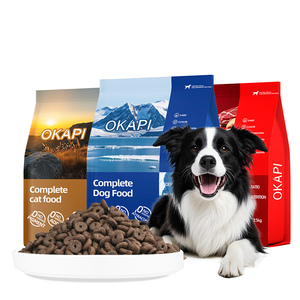
Nutritionally Balanced Complete Cat and Dog Food for Bulk Orders
- High-retort shelf stability
- Custom micronutrient matrix
- OEM Private Label packaging
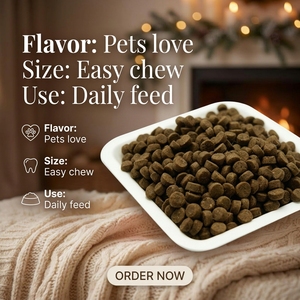
High Protein Chicken Freeze-Dried Coated Crisp Kibble Dog Food
- Raw-boosted palatability layer
- Lean muscle mass formulation
- Small breed & all-life-stages spec
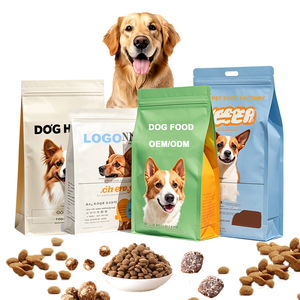
OEM Pet Dog Dry Food Wholesale Direct Sales Customization
- Direct factory pricing structure
- Balanced lipid and protein profiles
- Bulk container loading optimization
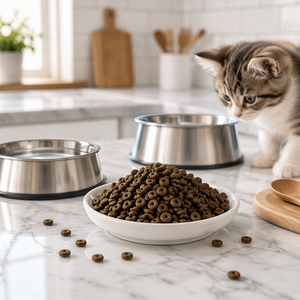
Mailushi Freeze-Dried Grain Free Cat Food Salmon Tuna Beef
- Sensitive digestion protocol
- Rich in Omega-3 fatty acids
- Zero grain or artificial fillers
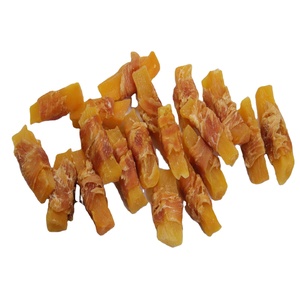
Wholesale Private Brand Natural Sweet Potato with Chicken Treats
- Real chicken breast wrapped
- Dietary fiber rich sweet potato
- Low-temperature dehydration
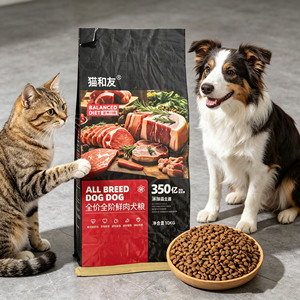
Pet Food Factory Dry Food For Dogs & Cats (18%-35% Protein)
- Scalable protein tier matching
- 10kg / 20kg retail & commercial bags
- Complete life-stage nutrition
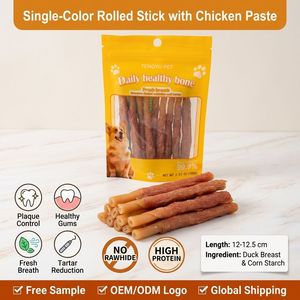
High Protein Duck Paste Coated Twisted Dog Chews Treats
- Rawhide-free digestable structure
- Dental plaque friction design
- Hypoallergenic duck formulation
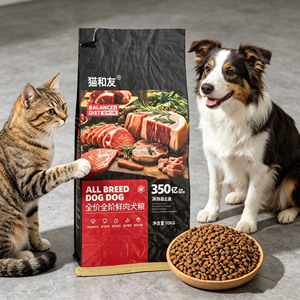
OEM ODM Best-Selling Complete Dry Pet Food (18%-45% Protein)
- Customizable crude protein tiers
- Precision thermal extrusion processing
- International export packaging
The Next-Gen Evolution of Canned Food & Wet Pet Nutrition Manufacturing
An technical evaluation of thermal processing technologies, clean-label emulsification dynamics, double-seam micro-engineering, and global compliance mandates reshaping wet canned product procurement.
Modern Thermal Sterilization & F0 Value Retort Control
Traditional canned food manufacturing was long hindered by over-cooking, which damaged thermosensitive micronutrients, amino acids (such as taurine and lysine), and organic organoleptic profiles. As a leading China canned food manufacturer and contract factory, our facilities utilize computer-controlled, continuous dual-stage counter-pressure water-immersion and steam-air retorts.
By dynamically calculating heat penetration values ($f_h$ and $j_h$ factors) in real-time, our automated systems enforce precise $F_0$ lethality values (target $F_0 \ge 3.0$ up to $12.0$ depending on pH and viscous density). This guarantees absolute destruction of Clostridium botulinum spores while preserving protein integrity, naturally bonded moisture content, and essential micronutrients without artificial preservatives.
Key Retort Processing Engineering Metrics
Our thermal processing profiles adhere strictly to FDA LACF (Low-Acid Canned Food) and EU Regulation 767/2009 parameters:
- Sterilization Value Range: Precise $F_0$ control between 3.00 and 15.00 min.
- Thermal Uniformity: Temperature deviation across retort basket space $\le \pm 0.5^\circ\text{C}$.
- Overpressure Management: Automatic air-overpressure balancing prevents pouch flexing, double-seam deformation, and micro-channel creation during rapid cooling phases.
- Seam Integrity Assurance: Optical micrometer double-seam inspection covering visual overlap, countersink depth, and seam thickness at 0.01mm resolution.
Strategic Industry Development Trends (2025–2030)
Understanding shifting global consumer standards, ingredient traceability requirements, and container material innovations.
Clean-Label & Mono-Protein Formulations
Global buyers are aggressively pivoting away from unspecified meat derivatives towards single-source animal protein wet cans (e.g., 100% Duck, Pure Tuna, Single-Source Salmon) with full supply chain traceability.
Flexible Packaging & BPA-NI Cans
Aluminum easy-open cans, lightweight retort pouches, and recyclable tinplate with BPA-Non-Intent (BPA-NI) food-grade linings have become mandatory for EU and North American retail compliance.
Functional Hydration & Wet Pastes
Canned food is no longer just calorie delivery; it acts as a functional hydration medium enriched with botanical extract complexes, glucosamine for joint health, and prebiotics for gastrointestinal care.
Future Global B2B Procurement Trends & Sourcing Analysis
Procurement leaders navigating global canned food supply chains face multifaceted disruptions, ranging from volatile raw material commodity costs (tinplate, aluminum, protein meal) to increasingly stringent international biosecurity standards. To maintain competitive advantage, foreign brand owners and distributors must align with vertically integrated manufacturing partners capable of offering:
| Procurement Dimension | Legacy Sourcing Model | Next-Gen OEM Factory Integration (Boffco Model) |
|---|---|---|
| Quality Assurance & Audits | Basic batch spot-checks, reactive testing post-shipping. | IFS Food v8, HACCP, online real-time NIR ingredient testing, full traceability from raw farm to container seal. |
| Recipe Customization | Off-the-shelf standard formulas; high minimum re-formulation costs. | In-house veterinary R&D team building custom matrix profiles, tailored crude protein/fat/moisture levels. |
| Supply Chain Agility | Single facility bottleneck, long production queues (12-16 weeks). | Dual-plant production capacity (Spain & Ukraine network / China high-volume export facility) yielding 4-6 week turns. |
| Regulatory & Export Support | Basic bill of lading; importer handles complex health filings. | Turnkey TRACES documentation, veterinary health certificates, EU Reg 767/2009 & FDA registration support. |
Technical Advantage: Emulsification & Gravy Rheology Control
A key quality indicator in canned wet food manufacturing is moisture separation and gel integrity. Our R&D team has perfected thermo-reversible hydrocolloid matrix systems (utilizing natural carrageenan, guar gum, and locust bean gum interactions). This guarantees that chunks-in-gravy, pâtés, and mousses maintain consistent texture, zero phase separation, and high palatability through shipping cycles across varied climate zones.
Vertically Integrated Manufacturing Rigor & In-House Veterinary R&D
Unlike trading brokers or fragmented co-packers, our enterprise controls the complete manufacturing value chain. From raw meat material qualification to extrusion, high-barrier pouch filling, double-seam canning, and automated packaging line operations—every step operates under a unified quality protocol.
Our core product team has been continuously refined since 2014. Recipes are formulated in-house by experienced animal nutritionists and subjected to controlled feeding trials supervised by staff veterinarians. When you order from our factory, your formula remains strictly proprietary under NDA protection.

Hands-On Ownership & Technical Oversight
Our founders and senior chemical engineers personally oversee critical batch release parameters and retort calibration. Every single batch is validated for palatability, microbiological safety, and nutrient density before dispatch.
IFS Food v8 & HACCP
Certified operational facilities adhering strictly to international food safety management systems, complete with CCP monitoring and automated trace-back software.
Custom Formulations
In-house laboratory support to formulate specific crude protein (18% to 45%), moisture target profiles, and tailored functional health claims.
Full Logistics Compliance
Complete export handling including Certificate of Analysis (CoA), TRACES documentation, veterinary health clearances, and multi-lingual retail artwork compliance checks.
B2B Canned & Wet Pet Food Procurement FAQ
Technical responses to common inquiries raised by brand procurement managers, importers, and retail chain buyers.
What is the minimum order quantity (MOQ) for private label canned and wet food production?
Initial production runs typically start at 1 full pallet per SKU for standard extruded dry food kibble, and 1 production batch (approximately 5,000 to 10,000 units depending on format) for canned wet food, aluminum cups, or retort pouches. Because recipe formulation, ingredient pre-weighing, and retort thermal cycle parameter setup are executed on a per-batch basis, exact MOQs are calculated during your initial technical brief to balance cost efficiency and agility.
How long does a complete custom recipe development and sampling cycle take?
A custom formulation progresses from brief to physical approved sample in 4 to 6 weeks. This timeline includes: (1) Nutrient matrix calculation against FEDIAF / AAFCO nutritional profiles; (2) Raw material sourcing and preliminary bench-top testing; (3) Pilot retort or extrusion production trial; (4) Palatability testing supervised by our veterinary team; and (5) Accredited third-party laboratory verification of the analytical composition (Crude Protein, Fat, Moisture, Ash, Fiber, and Taurine/Vitamin assay).
Which quality certifications, standards, and regulations do your production plants operate under?
Our manufacturing plants operate under IFS Food v8 (Higher Level), fully documented HACCP food safety plans, GMP+ feed safety assurance, and ISO 14001 environmental management protocols. All finished product packaging, labeling claims, nutritional profiles, and ingredient statements comply with EU Regulation (EC) No 767/2009, FEDIAF nutritional guidelines, and US FDA Low-Acid Canned Food (LACF) mandates.
How do you ensure zero cross-contamination for hypoallergenic and single-protein runs?
We enforce strict cleaning validation protocols (including swab testing for target DNA allergen residues) between distinct production cycles. Single-protein wet canned and pouch production lines utilize isolated ingredient prep equipment and dedicated CIP (Clean-In-Place) systems, eliminating cross-contact between species-specific proteins.
Can you handle complex export documentation and door-to-door distribution logistics?
Yes. We provide complete end-to-end export support. We issue batch-specific Certificates of Analysis (CoA), official Veterinary Health Certificates, TRACES documentation, and origin verification paperwork. Furthermore, we ship under Ex-Works (EXW), FCA, FOB, or DAP/DDP terms directly to your distribution centers or fulfillment network.
Ready to Launch Your High-Margin Canned & Pet Food Range?
Partner with China's leading canned food and contract wet pet food factory. Submit your target protein profile, packaging format, and volume requirements today.
✦ Confidentiality Assured · NDA Available Upon Request · Technical Response Within 24 Hours ✦