Featured White Label Pet Food & Treat Formulas
High-protein kibbles, freeze-dried coated diets, functional chews, and specialized pet food formulations available for OEM batch production, custom branding, and international export.
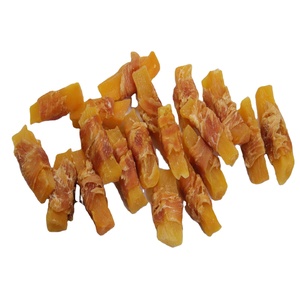
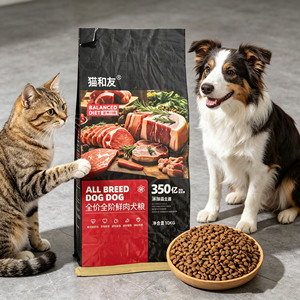
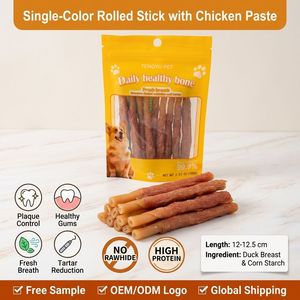
Global Sourcing Analysis & Pet Food Procurement Trends (2025–2030)
Understanding market dynamics, raw material security, processing innovations, and regulatory compliance frameworks for international pet food brand owners and wholesale importers.
1. Shift Toward High-Fresh-Meat Extrusion & Low Thermal Degradation
Traditional pet food production heavily relied on meat meals with repeated thermal processing cycles, often degrading labile amino acids such as lysine and methionine. Modern global procurement mandates Fresh Meat Injection Systems (FMIS), allowing raw slurry ratios up to 60-70% directly into twin-screw extruders. This preserves native nutrient matrices, boosts digestibilities beyond 88%, and drastically enhances natural palatability without synthetic flavor enhancers.
2. Surface Vacuum Enrobing & Freeze-Dried Coating Innovation
To satisfy premium pet owner expectations, white label manufacturers are adopting negative-pressure vacuum coating technology. By forcing rendered poultry oils, salmon oils, and pulverized freeze-dried meat powders deep into the internal pore matrix of dry kibble, brands eliminate greasy surface residue while delivering concentrated aromatic profiles. This process protects heat-sensitive omega-3 fatty acids ($EPA/DHA$) from oxidation during ambient shelf storage.
3. Single-Protein & Functional Veterinary Diets Demand
Immune sensitivities and adverse food reactions in companion animals have escalated global demand for mono-protein and hypoallergenic formulations. Modern OEM exporters maintain dedicated, certified single-protein lines (e.g., pure duck, pure lamb, or hydrolyzed salmon) paired with validated enzymatic washdown protocols. Integrating functional botanical extracts—such as milk thistle for hepatic support and green-lipped mussel for joint lubrication—allows brands to target veterinary-grade niches.
4. Strict Regulatory Convergence: EU 767/2009, FEDIAF & GACC
International cross-border pet food trade requires strict adherence to regional regulatory frameworks. Importers require manufacturing facilities operating under IFS Food v8, HACCP, GMP+, and full General Administration of Customs of China (GACC) export registration. Traceability down to individual raw material lot numbers, backed by physical laboratory assay verification, forms the cornerstone of modern risk mitigation in pet food distribution.
Technical Manufacturing Specifications Matrix
Analytical targets and processing parameters available for white label OEM/ODM custom development.
| Product Category | Crude Protein Range | Crude Fat Range | Key Processing Tech | Target Animal & Life Stage | Regulatory Standards |
|---|---|---|---|---|---|
| Super-Premium Dry Kibble | 28% – 45% | 12% – 22% | Twin-Screw Extrusion + Vacuum Coating | All Breeds (Puppy, Adult, Senior) | FEDIAF, AAFCO, IFS Food v8 |
| Freeze-Dried Coated Diets | 32% – 42% | 14% – 20% | Thermal Extrusion + Sublimation Enrobing | Small Breeds & Feline Active Diets | EU Reg. 767/2009, HACCP |
| Grain-Free Cat Formulas | 35% – 45% | 15% – 22% | Fresh Meat Slurry Injection (FMIS) | Kittens & Adult Cats (Sensitive Stomach) | FEDIAF Nutritional Requirements |
| Functional Chews & Treats | 18% – 30% | 3% – 8% | Low-Temp Cold Extrusion / Dehydration | Dog Dental Care & Training Rewards | Rawhide-Free Safety Profile |
| Wet Food Pouches & Cans | 8.5% – 12% (As Is) | 4.5% – 8% | Retort Sterilization ($F_0 \ge 3.0$) | Dogs & Cats (Hydration Diets) | IFS Food v8, Veterinary Health Certified |
Vertically Integrated Manufacturing & Quality Protocols
As an established enterprise pet food exporter and contract manufacturer, our supply chain integration bridges rigorous European veterinary nutritional science with high-capacity processing facilities. Every batch undergoes exhaustive analytical testing—from micro-ingredient dosing precision to post-pack moisture activity ($a_w$) stabilization.
Our in-house R&D team consists of veterinary nutritionists, bio-process engineers, and food safety specialists. Formulations are developed internally, subjected to controlled palatability feeding trials, and verified via independent ISO 17025 certified laboratory assays before commercial release.
Step-by-Step White Label & Contract Manufacturing Process
A streamlined, risk-free workflow designed for global brand managers, importers, and chain retailers.
Specification Brief
Define target nutrient profile (protein, fat, ash, fiber), target cost limits, kibble dimensions, and regional regulatory compliance targets (FEDIAF/AAFCO).
R&D & Pilot Extrusion
Custom recipe formulation by veterinary nutritionists, raw material sourcing, and trial extrusion runs to verify physical integrity and palatability performance.
Lab Assay Validation
Comprehensive chemical analysis verifying protein degradation factors, amino acid profiles, heavy metal limits, microbial safety, and shelf-life stability.
Packaging & Artwork Compliance
Design adaptation for foil pouches, bag structures with nitrogen flushing, multilingual packaging compliance, and barcoding setup.
Full Batch Manufacturing
Automated extrusion, drying, vacuum enrobing, and packaging under strict HACCP and IFS Food v8 quality monitoring.
Global Export Delivery
Issuance of Certificate of Analysis (CoA), veterinary health certificates, TRACES documentation, and FOB/CIF/DAP container shipping.
Frequently Asked Sourcing & Technical Questions
Detailed answers regarding minimum order quantities, custom recipe ownership, quality control, export documentation, and manufacturing lead times.
What is the Minimum Order Quantity (MOQ) for custom white label pet food orders?
Our minimum order quantities are structured around efficient manufacturing batch cycles to maintain recipe consistency and competitive pricing. For dry extruded kibble, typical initial production runs start at 1 full pallet per SKU for standardized base formulations, or approximately 3 to 5 metric tons for bespoke custom formulations. For wet pet food in pouches or cans, MOQs are aligned with single retort sterilization batches (typically 5,000 to 10,000 pouches depending on pack size). During technical onboarding, our sales engineering team works with your procurement team to optimize order sizes against shipping container capacities (20ft vs 40ft HQ).
How do you prevent heat degradation of vitamins and delicate nutrients during thermal extrusion?
High-temperature short-time (HTST) extrusion is carefully calibrated using advanced twin-screw technology. Thermal degradation is managed via precise micro-dosing and post-extrusion application techniques. Temperature-sensitive bio-actives, including heat-susceptible vitamins ($Vitamin\ C, B-complex$), probiotic strains, digestive enzymes, and essential omega fatty acids, are preserved by utilizing our Vacuum Enrobing System. Instead of exposing these nutrients to thermal stress inside the extruder barrel, they are infused into the kibble matrix under negative pressure after drying, ensuring full potency throughout the guaranteed product shelf life.
Which export documentation, safety certificates, and quality standards do you provide?
Every commercial production shipment is supplied with a comprehensive export documentation package. Our facilities operate under strict compliance with IFS Food v8, HACCP food safety management systems, GMP+ feed safety assurance, and ISO 14001 environmental management standards. Standard export documentation includes: Batch-Specific Certificate of Analysis (CoA), Official Veterinary Health Certificates issued by authorized government authorities, Certificate of Origin, Form E/FTA documentation where applicable, Packing Lists, and Bill of Lading. Products destined for European markets comply with EU Regulation (EC) No 767/2009 and FEDIAF nutritional guidelines.
How long does the custom recipe development and sampling process take?
The standard R&D timeline for a brand-new custom formulation takes approximately 4 to 6 weeks from initial technical brief to final sample approval. This timeframe covers: 1) Nutritional matrix creation by our staff veterinary nutritionists matching target protein/fat profile and market positioning; 2) Raw material sourcing and allergen segregation verification; 3) Pilot extrusion or retort trial runs; 4) In-house laboratory analytical verification; and 5) Palatability testing against commercial benchmarks. If you select one of our 200+ pre-validated base formulas, sample dispatch can be executed in as little as 5 to 7 working days.
Can you produce single-protein, grain-free, and novel protein allergy diets?
Yes. Single-protein (mono-protein) and hypoallergenic diets represent a significant segment of our manufacturing operations. We utilize dedicated production scheduling accompanied by validated enzymatic flush and cleaning procedures between operational runs to eliminate allergen cross-contact. Formulations can be built exclusively around single animal protein sources such as duck, lamb, salmon, or hydrolyzed chicken liver, combined with grain-free carbohydrate bases like sweet potato, tapioca, or green peas to support pets with food sensitivities or gastrointestinal issues.
What packaging formats and shelf-life preservation options are available for white label brands?
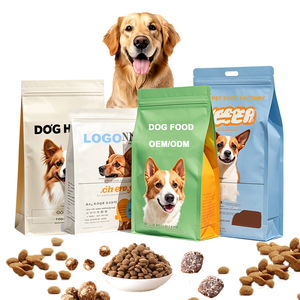
We provide a comprehensive range of flexible and rigid packaging formats. For dry food, options include quad-seal bags, flat-bottom pouches, and large bulk bags (1kg to 20kg) with press-to-close zippers, side gussets, matte/gloss foil finishes, and eco-friendly recyclable PE/PE laminate films. To ensure extended freshness and prevent lipid oxidation, our automated packaging machinery integrates Modified Atmosphere Packaging (MAP) using high-purity nitrogen gas flushing, maintaining residual oxygen levels below 2% and guaranteeing an 18 to 24-month shelf life under ambient storage conditions.
How does your freeze-dried coating process differ from conventional dry kibbles?
Conventional dry kibbles rely solely on liquid fat and digest spray coatings applied on the kibble exterior. Our advanced Freeze-Dried Coated Process combines thermal extrusion with raw, freeze-dried meat powder application. Sublimed raw meat (such as chicken, duck, or beef) is finely ground and bonded to the kibble exterior using natural fat binders under negative pressure. This delivers raw nutritional appeal, raw meat aroma, and high protein density while retaining the convenience, dental benefits, and shelf stability of dry extruded kibble.
Are your manufacturing facilities compliant with EU, North American, and Asian import regulations?
Yes. Our manufacturing facilities hold valid export registrations with the General Administration of Customs of China (GACC) and satisfy all official health and biosecurity protocols required for direct entry into the European Union, Southeast Asia, the Middle East, and Latin America. Labeling layouts, ingredient naming conventions, and analytical guarantee statements are thoroughly reviewed by our regulatory team to ensure full compliance with regional feed regulations (e.g., EU Regulation 767/2009, AAFCO label standards, or regional agriculture guidelines).
What is the standard manufacturing lead time from order placement to port shipment?
Once artwork is approved and raw materials are staged, standard production lead times are 21 to 30 calendar days for repeat orders. For first-time OEM orders involving custom cylinder printing or new packaging bag manufacturing, the lead time is typically 35 to 45 days due to initial bag production. We maintain buffer stocks of key functional ingredients, protein meals, and standard packaging bags to support expedited manufacturing options for high-volume contract clients with strict distribution schedules.
How do you ensure raw material safety, ingredient traceability, and freedom from heavy metals?
Raw material safety is enforced through a strict supplier qualification program. Ingredients are sourced exclusively from audited, veterinary-approved slaughterhouses, rendering facilities, and agricultural vendors. Every incoming raw material shipment is quarantined and tested for moisture content, peroxide value (PV), free fatty acids (FFA), heavy metal contaminants (lead, arsenic, cadmium), mycotoxins (aflatoxin), and microbiological safety (Salmonella, E. coli). Our ERP system assigns a unique barcode identifier to every raw batch, enabling 100% two-way traceability from raw grain/meat receipt to final packed pallet delivery.
Ready to Scale Your Private Label Pet Food Business?
Partner with an established manufacturer and global exporter. Request custom formulation pricing, sample kits, facility audits, or technical product briefs directly from our engineering team.