Featured Industrial & Bulk Dehydrated Solutions
Rigorous microbiological control, customizable cut geometry, and micro-encapsulated drying profiles engineered for global food manufacturers and private labels.
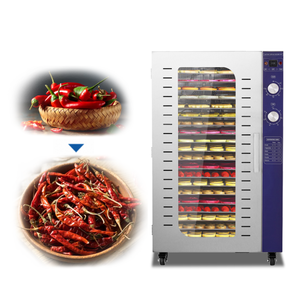
20 Trays Commercial Food Dehydrator for Fruits and Vegetables Stainless Steel Housing 220v-240v
Get a Quote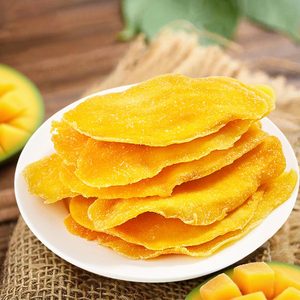
Natural Dried Mango Slices Soft Chewy Tropical Fruit Snack Bulk Wholesale & Private Label Available Halal & ISO Certified
Get a Quote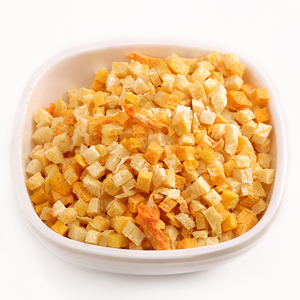
Wholesale Factory Price 100% Natural Sublimated Freeze Dried Pumpkin Cube Sweet Dehydrated Vegetable Freeze-Dried Pumpkin Powder
Get a Quote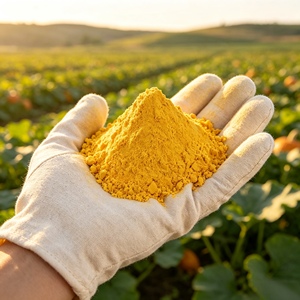
Large Quantity Supply Natural Dehydrated Pumpkin Powder for Food Factory Production
Get a Quote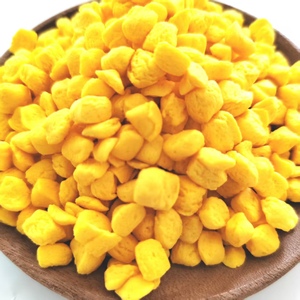
Instant Food Factory's Fermented Dried Egg Granules AD Steamed Puffed Eggs Greenhouse Cultivation Natural Snack Toppings 10x10mm
Get a Quote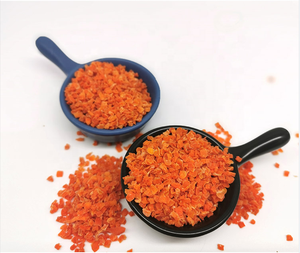
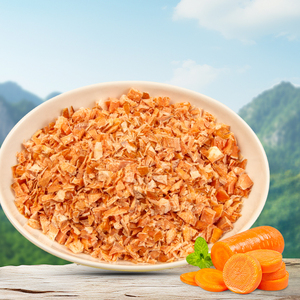
Premium Quality Dehydrated Carrot Dice FD Freeze-Dried Soup Snack Bulk Packed 1kg 18-Month Shelf Life Baked Processed
Get a Quote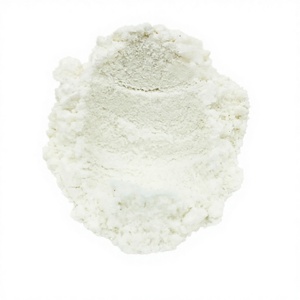
Source Factory Wholesale Supply Meal-Replacement Dehydrated Vegetables White Corn Flour Powder Cooked Baking-Grade Bulk
Get a QuoteAs China’s foremost dehydrated food manufacturer and exporter, our operational philosophy rests on strict farm-to-factory vertical integration. Modern global procurement teams require more than basic dehydration; they demand batch-to-batch nutritional parity, microbiological safety guarantee, and flawless rehydration dynamics. Operating state-of-the-art continuous Hot Air Dehydration (AD) tunnels and Low-Temperature Vacuum Freeze-Drying (FD) sublimation chambers, our facilities bridge agricultural abundance with industrial manufacturing precision.
Every raw agricultural intake undergoes a multi-stage decontamination process, including high-pressure ultrasonic washing, steam sterilization, optical sorting for foreign material elimination, and X-ray metal detection down to 0.5mm stainless steel sensitivity. Our processing lines are housed within ISO 14644-1 Class 100,000 cleanrooms operating under HACCP, BRCGS Grade A, ISO22000, HALAL, and KOSHER certifications.
Advanced Sublimation & AD Tech
Deep vacuum lyophilizate drying preserves delicate cellular structures, heat-sensitive Vitamin C, and natural pigment profiles without thermal damage.
Zero-Pesticide Residue Mandate
Contract farming bases across prime agricultural micro-climates enforced by rigorous GC-MS/MS testing compliant with EU and US FDA regulation thresholds.
Global B2B Supply Resilience
High-speed packaging lines supporting 1kg to 25kg aluminum foil vacuum liners, nitrogen flushing, and container-level ocean freight resilience.
Selecting the appropriate industrial dehydration process requires aligning end-use functional requirements with economic parameters. The technical matrix below evaluates Air Dehydration (AD) against Freeze Drying / Sublimation (FD) across core physical and chemical metrics.
| Evaluation Parameter | Air Dehydration (AD) | Sublimation Freeze-Drying (FD) | Impact on Industrial Application |
|---|---|---|---|
| Moisture Content (% w/w) | 4.0% – 7.0% | 1.0% – 3.0% | FD provides superior microbial stability and extended ambient shelf life (up to 24 months). |
| Water Activity ($a_w$) | 0.30 – 0.45 | 0.15 – 0.25 | Lower $a_w$ prevents non-enzymatic browning (Maillard reaction) and enzymatic degradation. |
| Rehydration Velocity | 3 to 8 Minutes (Hot Water) | 10 to 30 Seconds (Cold/Warm) | FD is optimal for instant noodles, ready-to-eat soups, and immediate meal-replacements. |
| Structural Integrity | Volumetric Shrinkage (Dense) | Porous Porosity Maintained (1:1) | FD retains shape, ideal for snack toppings, pet food treats, and visual premium blends. |
| Nutrient Retention | 65% – 80% Retention | 95% – 98% Retention | FD preserves volatile aromatic compounds, thermal-labile vitamins, and phytonutrients. |
| Bulk Density (g/L) | 350 – 500 g/L | 80 – 180 g/L | AD offers freight cost efficiency; FD delivers high volume-to-weight formulation profiles. |
The international dehydrated ingredients ecosystem is undergoing a structural transition driven by shifting consumer preferences, technological breakthroughs, and macro-supply disruptions. Global B2B buyers must align procurement strategies with four emerging trends:
1. Clean-Label & Functional Granulation
Food manufacturers are phasing out synthetic carrier agents and artificial flavor enhancers. High-purity, single-ingredient powders (such as 100% natural pumpkin flour and white corn meal) are replacing starch fillers in instant soups, baby foods, and meal-replacement shakes.
2. Specialized Animal & Pet Nutrition Growth
Humanization of pet snacks has driven exponential demand for sublimated freeze-dried pumpkin cubes, dehydrated diced carrots, and high-protein egg granules. These ingredients improve gastrointestinal health, ocular function, and coat shine in premium kibble formulations.
3. Hyper-Instant Rehydration Profiles
Urbanization and fast-paced lifestyles demand convenience. Advanced steam-puffing and vacuum-fermentation techniques applied to egg granules and vegetable flakes allow rapid reconstitution in boiling water within under 60 seconds, without rubbery textures.
4. Environmental Traceability & ESG Metrics
Major North American and European importers require fully traceable supply chains. Solar-assisted pre-drying, waste-water recycling, and agricultural decarbonization protocols are becoming key procurement criteria during vendor site audits.
Frequently Asked Technical Questions
Clear, authoritative answers addressing quality parameters, compliance standards, and custom OEM manufacturing workflows.
What are the critical quality standards and microbiological limits for your bulk exported dehydrated vegetables?
Our products meet strict export specifications under ISO22000 and BRCGS protocols. Standard microbiological limits for our AD and FD vegetable lines include: Total Plate Count (TPC) < 100,000 CFU/g (or < 10,000 CFU/g for low-micro lines upon request), Coliforms < 100 CFU/g, E. coli < 10 CFU/g, and Salmonella Absence in 25g. Moisture content is strictly held below 5.0% for FD products and below 7.0% for AD products, maintaining water activity ($a_w$) below 0.35 to prevent pathogenic proliferation.
How do you ensure pesticide residue and heavy metal compliance for strict markets like the EU, US, and Japan?
We operate under a vertically managed farming model where soil, irrigation water, and crop inputs are monitored months prior to harvest. Every batch undergoes comprehensive GC-MS/MS and LC-MS/MS testing for over 400 pesticide compounds, ensuring full compliance with EU Regulation (EC) No 396/2005 and US FDA MRL (Maximum Residue Limits). Heavy metals (Lead, Cadmium, Arsenic, Mercury) are validated via ICP-MS to remain far below international action levels.
What is the typical rehydration ratio for AD vs FD shredded carrots and pumpkin dice?
Rehydration capacity is a core quality benchmark. Our AD shredded carrots demonstrate a rehydration ratio of approximately 1:6 to 1:8 in boiling water within 3–5 minutes. FD pumpkin cubes and FD carrot dice exhibit a rapid rehydration ratio of 1:10 to 1:12, reconstituting back to original fresh cell texture and mouthfeel in warm water within 30 seconds due to their expanded sublimation pore structure.
Can you accommodate custom particle sizing, mesh granulations, and private-label packaging?
Yes. We provide complete OEM/ODM capabilities. Cut geometries range from 3x3mm, 5x5mm, 10x10mm dice to cross-cut shreds (10-30mm), micro-powders (60–120 mesh), and custom granules. Packaging options range from 1kg retail pouches, 10kg/20kg bulk cartons with double PE heat-sealed liners, to 500kg super-sacks with nitrogen flushing for extended ocean transit.
What are your standard Minimum Order Quantities (MOQ) and production lead times?
For standard stock items (e.g., AD carrot shreds, pumpkin powder), MOQs start at 500kg to 1,000kg. For specialized custom cuts, specific steam-sterilization profiles, or low-microbiological custom runs, the standard MOQ is 3,000kg (or 1x20' FCL container). Standard production lead times are 10–15 business days post-sample approval and deposit receipt.
What shipping terms and documentation support do you provide for international customs clearance?
We export under FOB, CFR, CIF, DDP, and FCA terms. Every shipment is accompanied by a comprehensive customs documentation dossier: Certificate of Analysis (CoA) from our ISO 17025 accredited laboratory, Phytosanitary Certificate issued by China Customs (GACC), Certificate of Origin (Form E, CO, etc.), Non-GMO Declaration, Radiation-Free Certificate, and Allergen-Free Matrix documentation.
Accelerate Your Ingredient Supply Chain
Request technical product specification sheets, Certificate of Analysis (CoA) samples, or direct factory quotation. Our B2B food technology engineers respond within 12 business hours.
Get a Quote