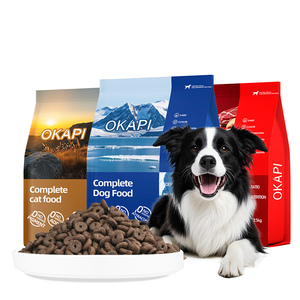
Bulk Private Label
Directly engineered at our certified manufacturing facilities. Custom recipe matrices, private label packaging, and international veterinary compliance built for global brand expansion.
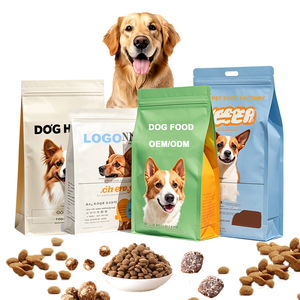
Quantitative benchmarks demonstrating supply chain reliability, technical compliance, and raw material throughput across Chinese production facilities.
| Processing Method | Moisture Retention ($a_w$) | Protein Preservation Rate | Primary Packaging Formats | Target Product Application |
|---|---|---|---|---|
| Vacuum Freeze-Drying (Lyophilization) | < 0.60 $a_w$ (Moisture < 5%) | > 98.2% Bioavailability | Nitrogen-Flushed Pouches, Tubs | Raw Protein Cubes, Reconstitution Toppers, Single-Ingredient Raw Treats |
| Thermal Retort Sterilization (Wet Snacks) | 78.0% - 85.0% Moisture | > 91.5% Bioavailability | Multi-Layer Barrier Pouches, Tubes | Hydration Licks, Creamy Purees, Functional Mousse, Chunk-in-Gravy |
| Twin-Screw Thermal Extrusion | 8.0% - 10.0% Moisture | > 88.0% Bioavailability | High-Barrier Aluminum Bags (1kg - 10kg) | Freeze-Dried Coated Kibble, Functional Dental Treats, High-Protein Diets |
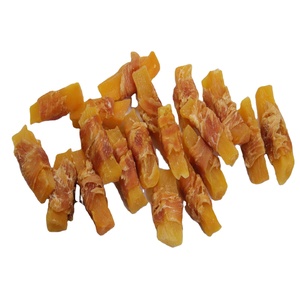
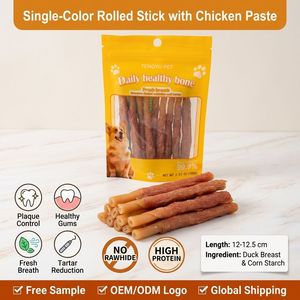
| Hot-Air Dehydration (Low Temp) | 12.0% - 14.0% Moisture | > 92.0% Bioavailability | Resealable Zipper Bags with Desiccant | Jerky Strips, Wrapped Fruit/Sweet Potato Treats, Twisted Chews |
A closed-loop manufacturing system that integrates veterinary science, automated processing equipment, and rigorous international regulatory compliance.
Top-tier Chinese factories maintain dedicated animal nutrition laboratories staffed by Ph.D. toxicologists and veterinary specialists. Every private-label recipe undergoes comprehensive nutrient profiling against strict FEDIAF and AAFCO nutritional thresholds, ensuring micro-nutrient integrity, taurine stabilization, and precise calcium-to-phosphorus ratios.
Global brand protection demands rigorous biosecurity. Tier-1 manufacturing facilities operate under validated IFS Food v8, BRCGS, HACCP, ISO 22000, and GMP+ frameworks. From raw animal protein quarantine to final batch release, every lot undergoes PCR testing for Salmonella, Listeria, heavy metals, and mycotoxins.
Modern pet food conglomerates utilize strategically located production campuses across domestic marine and agricultural hubs. This vertical integration allows for single-source meat meal processing, fresh meat slurry pumping, and localized cold-chain logistics, guaranteeing uninterrupted production lines during global supply chain disruptions.
To support high-margin hyper-allergenic and diet-specific retail SKUs, leading factories deploy separate, allergen-validated processing lines. Complete sanitation validation protocols (CIP/COP) prevent cross-contact between avian, bovine, and seafood proteins, backing up "novel protein" brand marketing promises.
From multi-layer foil pouch printing with matte finish to nitrogen-flushed tray sealing and shelf-ready retail display packaging, Chinese factories provide end-to-end OEM execution. In-house compliance teams review all multi-lingual packaging artwork against strict country-specific feed labeling regulations (EU Reg 767/2009, US FDA Title 21 CFR).
The global cat snack market has undergone a structural paradigm shift over the last decade. Historically viewed as secondary reward items, modern cat treats are now evaluated under the same rigorous nutritional and bio-analytical criteria as complete staple diets. As obligate carnivores, cats possess highly specific metabolic pathways requiring high animal-derived protein, essential amino acids such as taurine and arginine, specific lipid profiles (arachidonic acid), and zero synthetic binders or artificial filler matrices.
In response to global brand demand, China’s premier pet food manufacturers have modernized their facilities, transitioning from low-cost manual assembly operations into highly automated, bio-technologically sophisticated manufacturing hubs. Today, sourcing executives, private label brand owners, and procurement directors recognize Chinese factories not merely for volume capacity, but for superior technical execution in lyophilization (freeze-drying), thermal retorting of liquid snacks, and enzymatic hydrolysis palatability engineering.
Procurement strategies in Western Europe, North America, and the Asia-Pacific region are increasingly dictated by functional health claims. Modern consumers demand treat SKUs that provide measurable biological benefits—including urinary tract support ($pH$ balance control), hairball control via dietary fiber and cellulose matrices, oral health mechanical plaque removal, and dermatological barrier support through Omega-3 ($EPA/DHA$) fortification.
Top Chinese factories have integrated these functional requirements into baseline OEM formulation libraries. Through strategic partnerships with local animal science institutes, facilities now incorporate specialized bioactive ingredients such as:
The competitive advantage of top Chinese cat treat factories lies in their hardware investments. Leading manufacturers deploy high-precision processing machinery capable of maintaining raw ingredient nutrient density while satisfying stringent global pathogen-destruction requirements.
A. Industrial Vacuum Freeze-Drying (Lyophilization)
Freeze-drying represents the premier segment of the cat treat market. The process involves freezing raw animal tissues (chicken breast, Atlantic salmon, beef liver, duck heart) to $-40^\circ\text{C}$, followed by primary drying in a vacuum chamber where solid ice directly sublimates into vapor under low atmospheric pressure (< 100 Pa). This process preserves delicate enzymatic structures, natural vitamin profiles, and physical raw meat textures without chemical preservatives. Top factories operate continuous multi-chamber lyophilizers with total drying surface areas exceeding 5,000 square meters, keeping final moisture content strictly below $5.0\%$ and water activity ($a_w$) under $0.60$ to inhibit microbial proliferation completely.
B. High-Pressure Thermal Retorting for Liquid Purees & Pouches
The "lickable treat" or cat puree category demands exceptional thermal processing precision. Fresh meat slurries are emulsified down to particle sizes below 50 microns to achieve a silky consistency, combined with natural hydrocolloids (such as xanthan gum or tapioca starch), and sealed into multi-layer aluminum-barrier foil tubes. The products then enter automated counter-pressure retort sterilizers. Retort cycles are governed by precise mathematical lethality values ($F_0 \ge 3.0$), ensuring the destruction of Clostridium botulinum spores while preventing thermal degradation of heat-sensitive amino acids like taurine.
E-E-A-T (Experience, Expertise, Authoritativeness, and Trustworthiness) in pet food sourcing hinges upon raw material biosecurity. Leading Chinese manufacturers operate within strict regional agricultural zones, establishing integrated contract-farming networks for poultry and direct port access for wild-caught pelagic fish.
Every incoming raw protein batch undergoes a multi-point verification protocol before entering the production hall:
For procurement managers and global brand architects, aligning product roadmaps with upcoming industry vectors is essential for maintaining retail market share. Based on global market intelligence and factory R&D data, the following trends will dominate the cat treat manufacturing landscape over the next five years:
Traditional pet treat extrusion relied heavily on dehydrated meat meals. Future factory capital expenditures are centered on Direct Meat Injection Extrusion Technology, allowing up to 70% fresh, unfrozen meat slurries to be directly introduced into twin-screw extruders. This technology reduces thermal stress on proteins and creates dual-textured treats—such as crunchy outer cereal shells filled with soft, functional creamy centers containing dental or calming supplements.
International retailers (particularly in the European Union) are imposing stringent Scope 3 emissions reporting requirements on suppliers. Forward-thinking Chinese factories are adapting by:
While probiotics face shelf-stability challenges in treats stored at room temperature, postbiotics (inactivated microbial cells and their metabolic byproducts) offer extreme heat and moisture resistance. Chinese factory R&D teams are incorporating heat-treated Lactobacillus strains into liquid and dehydrated treat recipes to deliver proven gut health and immune support without risking microbial decay over shelf life.
Direct technical answers to common procurement, regulatory, and production inquiry metrics for global importers and brand owners.
Ready to scale your private-label cat treat portfolio with export-grade formulations, guaranteed biosecurity, and competitive factory-direct pricing? Submit your brief to connect directly with our senior engineering and export sales teams.