Featured Pet Coat Supplement Solutions
Custom OEM/ODM Manufacturing Portfolio: High-palatability Chews, Bioactive Oils, Novel Insect Proteins, and Functional Powders
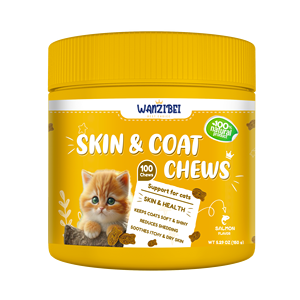
Cats Skin Coat Supplement Omega-3 Anti Shedding Pet Itch Relief Chewable Salmon Oil Healthy Shine Vitamin Puppy
Inquire Now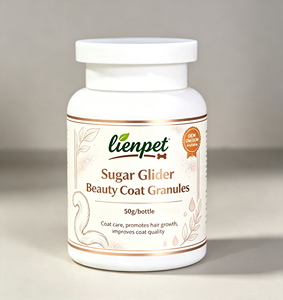
Sugar Glider Beauty Coat Powder Vitamins Supplement for Coat Care Promotes Hair Growth & Improves Coat Quality
Inquire Now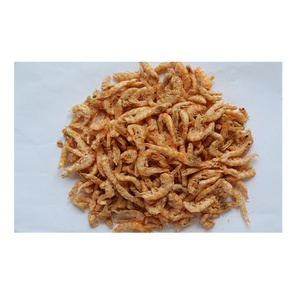
Factory Direct Eco-Friendly Freeze-Dried Krill Dry Food Fish Skin Coat Supplement
Inquire Now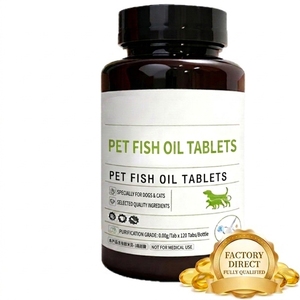
Pet Fish Oil Health Care Supplement Shiny Healthy Coat Nutritional Supplement OEM/ODM
Inquire Now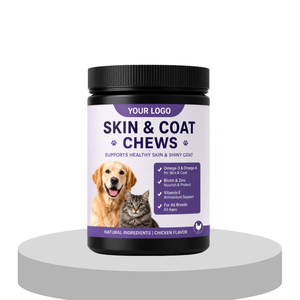
OEM/ODM Adult Skin & Coat Chews with Omega 3 Fatty Acids for Supple Skin Glossy Coat Allergy & Itch Relief Vegan Supplement
Inquire Now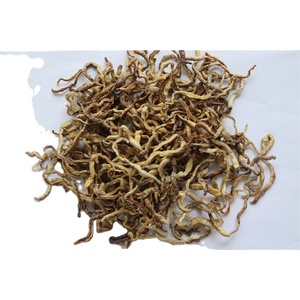
100% Natural Freeze-Dried Fish Food and Earthworms Premium Dry Skin Coat Supplement
Inquire Now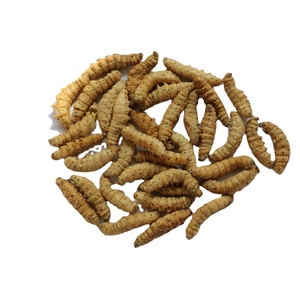
Silkworm Pupa Freeze-Dried Fish Skin Protein High-Protein Premium Dry Food Eco-Friendly Coat Health Supplement for Small Breeds
Inquire Now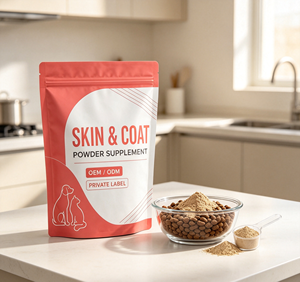
OEM ODM Pet Skin & Coat Powder Supplement Omega3 Biotin Salmon Oil Supports Healthy Coat Skin Health Private Label Service
Inquire Now1. Industry Overview: The Strategic Paradigm Shift in Pet Dermal & Coat Nutrition
The global pet wellness industry has transitioned rapidly from basic, preventative nutritional maintenance toward specialized, therapeutic-grade dermatological support. Dermal integrity and follicular health serve as the primary external barometer of a companion animal's internal metabolic vitality. As pet humanization reaches peak saturation in Western Europe, North America, and East Asia, brand owners and procurement officers require advanced contract manufacturing partners capable of transforming clinical biochemistry into stable, highly bioavailable commercial formats.
Sourcing pet skin and coat supplements from premier Chinese manufacturing hubs offers unparalleled supply chain agility, cost optimization, and raw material access. Modern Chinese processing centers are no longer mere low-cost batch processors; they have evolved into high-precision biopharmaceutical-grade facilities equipped with cold-chain enzymatic extraction, low-temperature vacuum freeze-drying, and specialized lipid micro-encapsulation machinery. This whitepaper systematically evaluates the current engineering standards, ingredient efficacy matrices, and contract manufacturing strategies required to build a market-leading pet coat brand.
Key Dermal Biomarkers Targeted by Modern OEM Formulations:
- Transepidermal Water Loss (TEWL): Controlled via barrier-repairing Linoleic Acid (LA) and Ceramides.
- Pruritus & Inflammatory Cascades: Mitigated through high-concentration Eicosapentaenoic Acid (EPA) and Docosahexaenoic Acid (DHA) long-chain polyunsaturated fatty acids.
- Follicular Anchoring & Keratin Synthesis: Supported by bioavailable Biotin, Zinc Methionine complexes, and specialized marine collagen peptides.
2. In-Depth Technical Analysis of Premier Coat Supplement Delivery Formats
A primary failure mode in private label pet supplement development is selecting an inappropriate delivery system for active lipid ingredients. Polyunsaturated Fatty Acids (PUFAs) are inherently susceptible to oxidative degradation when exposed to thermal stress, UV radiation, and atmospheric oxygen. Leading Chinese manufacturing plants utilize specialized galenic forms tailored to distinct consumer preference segments and targeted physiological pathways.
Cold-Pressed Soft Chews
Utilizes no-heat extrusion technology below 42°C. Preserves fragile Omega-3 double bonds while providing 98%+ acceptance rates among picky canine and feline subjects.
Micro-Encapsulated Powders
Spray-dried emulsion powders converting pure liquid fish and krill oils into free-flowing, stable powders. Ideal for meal toppers and multi-vitamin formulations.
Nitrogen-Flushed Liquid Oils
Pure Norwegian Salmon Oil and Antarctic Krill Oil bottled in airless pumps with liquid nitrogen headspace purging to guarantee peroxide values (PV) stay under 5 mEq/kg.
Freeze-Dried Raw Matrices
Sublimation drying at -40°C locks in intact cellular proteins from silkworm pupae, wild krill, and earthworms, providing ultra-clean, hypoallergenic functional whole foods.
High-Potency Phytotherapy
Concentrated botanical extracts including Evening Primrose, Borage Oil (GLA), and Burdock Root blended into systemic anti-itch solutions for severe allergic dermatitis.
Single-Protein Hypoallergenic Treats
Targeted at sensitive breeds. Utilizes insect proteins (Tenebrio molitor, Hermetia illucens) to bypass common poultry and beef food-sensitivity triggers.
3. Global Strategic Sourcing & Procurement Trends (2026-2030)
Procurement executives managing pet nutrition portfolios must navigate significant macroeconomic shifts, regulatory evolutions, and sustainability imperatives over the coming decade. Sourcing strategy can no longer rely purely on historical unit cost metrics; it must incorporate long-term supply chain security, environmental traceability, and raw material purity specifications.
A. Sustainable Marine Alternatives & Krill Phospholipids
Traditional wild-caught anchovy and sardine oil supply chains face ecological volatility and quota tightening. Strategic procurement is shifting toward Antarctic Krill (Euphausia superba) and microalgae (Schizochytrium sp.). Krill oil delivers EPA and DHA bound directly to phospholipids rather than triglycerides, allowing superior cellular absorption and integration into dermal tissue membranes. Marine-sourced algae offer 100% vegan, heavy-metal-free Omega-3 profiles with zero marine bio-accumulation risks.
B. Circular-Economy Insect Proteins & Novel Substrates
Novel insect protein matrices—such as upcycled Silkworm Pupa (Bombyx mori) and Black Soldier Fly Larvae (BSFL)—are rapidly capturing premium market share. Silkworm pupae represent an exceptionally dense source of alpha-linolenic acid (ALA) and antimicrobial peptides, rendering them effective for controlling bacterial overgrowth on sensitive feline and canine skins. Factories leveraging automated insect rearing and clean-label freeze-drying offer brands an unbeatable ESG story paired with authentic physiological benefits.
C. Micro-Encapsulation & Smart Delivery Tech
Micro-encapsulation using gum arabic and complex coacervation matrices protects sensitive lipids from oxidation during shelf life without requiring synthetic chemical preservatives such as BHA, BHT, or Ethoxyquin. Clean-label natural preservation systems based on Mixed Tocopherols, Rosemary Extract, and Green Tea Polyphenols are now mandatory for entering European and North American retail distribution.
4. Engineering & Scientific Formulation Benchmarks for OEM Customization
Formulating high-performing dermal supplements requires balancing biochemistry, palatability engineering, and physical structural stability. When contracting a manufacturing plant in China, brand technical managers should benchmark supplier capability against rigorous physical and chemical parameters.
Below is a comparative breakdown of functional ingredient matrices engineered for targeted coat health indications:
- Desquamation & Shedding Reduction: Requires balanced Omega-6 to Omega-3 ratios between 3:1 and 5:1. High concentrations of Linoleic Acid nourish epidermal lipid ceramides, strengthening hair follicle retention.
- Melanin Enhancement & Coat Pigmentation: Dependent on organic trace mineral complexes, specifically Copper Glycinate and Tyrosine, which act as rate-limiting substrates for tyrosinase during hair growth cycles.
- Atopic Dermatitis & Allergy Modulation: Utilizes synergistic blends of EPA (Eicosapentaenoic Acid), Quercetin, Spirulina, and Probiotics (Lactobacillus rhamnosus) to suppress systemic IgE-mediated histamine release.
Production Line Processing Safeguards
Leading Chinese facilities utilize multi-stage quality gates to ensure physical integrity and biochemical activity:
1. Cold-Chain Raw Material Handling: Marine oils are stored under inert argon gas blankets in temperature-controlled vats at <4°C prior to compounding.
2. Low-Temperature Dehydration: Soft chews undergo ambient air-drying tunnels rather than thermal ovens to maintain vitamin B-complex and enzyme bioavailability.
3. Heavy Metal Analytical Testing: Every raw oil batch is checked via Inductively Coupled Plasma Mass Spectrometry (ICP-MS) for Arsenic, Cadmium, Lead, and Mercury down to parts-per-billion (ppb) limits.
5. Enterprise Manufacturing Infrastructure & Supply Chain Integration
Partnering with an established European-Asian joint venture manufacturing infrastructure provides global brand owners with a distinct structural competitive advantage. By bridging advanced nutritional science, rigorous quality management systems, and dual-facility redundancy, client brands achieve maximum supply chain continuity.
Vertically Integrated Operations
From initial R&D formulation, raw material sourcing, and pilot batch trials to final retort packaging, extrusion, and export clearance—all steps occur within a unified quality control architecture.
Certified Global Compliance
Facilities operate under audited IFS Food v8, HACCP plans, GMP+ feed safety assurance, ISO 14001, and strictly adhere to FEDIAF and EU Regulation (EC) No 767/2009 specifications.
In-House Veterinary & R&D Team
Formulations are engineered directly by experienced animal nutritionists and audited by staff veterinarians to verify palatability, therapeutic dosing, and legal claim compliance.
By maintaining comprehensive control over formulation parameterization, batch validation, and international documentation clearance (TRACES, Health Certificates, CoA), client brands eliminate intermediate broker markups while securing market lead times that are 40% faster than traditional contract copackers.
6. Comprehensive B2B Procurement FAQ: Technical Sourcing & OEM Guidelines
Below are essential answers to technical and logistical questions faced by procurement teams when negotiating private label manufacturing contracts for pet dermal supplements.
What are the Minimum Order Quantities (MOQs) for private label coat supplement manufacturing?
MOQs depend directly on the delivery matrix and packaging choices. Typical baseline MOQs for customized soft chews start at 1,000 standalone retail tubs (or 100,000 individual chews per production run). For liquid oils in nitrogen-flushed pumps, MOQs start at 2,000 units per formulation. Freeze-dried custom formulations generally require a minimum batch run of 500 kg raw input weight to optimize freeze-dryer chamber loading efficiency.
How do you prevent rancidity and oxidation in high-omega liquid fish oil products?
Oxidation control relies on a three-tier protection process: First, raw oil incoming lots are tested for Anisidine Value (AV) and Peroxide Value (PV). Second, processing and bottling occur in nitrogen-blanketed closed-loop circuits to remove ambient oxygen. Third, formulations are stabilized with natural non-GMO mixed tocopherols and rosemary extract, packaged in UV-impermeable airless pump bottles or amber aluminum bottles.
What international quality standards and regulatory compliance documentation do you provide?
Every shipment is accompanied by a batch-specific Certificate of Analysis (CoA) from an ISO 17025 accredited laboratory, detailing active lipid contents, microbiological assays (Salmonella, E. coli), heavy metal counts, and stability indicators. Production facilities operate under IFS Food v8, HACCP, GMP+, and ISO 14001, providing full TRACES, FDA facility registration, and EU Regulation (EC) No 767/2009 compliance support.
Can we request custom formulations targeting specific health claims like anti-shedding or hypoallergenic relief?
Yes. Our in-house R&D lab and veterinary formulation team specialize in custom formulation. We can build proprietary nutrient matrices from scratch—incorporating brand-exclusive novel ingredients (e.g., silk protein peptides, organic freeze-dried krill, specialty probiotics)—complete with palatability testing protocols and regulatory claim verification for your target export region.
What is the typical lead time from initial concept brief to ex-factory shipment?
Standard timeline for an existing formulation with custom packaging artwork is 3 to 4 weeks. For completely novel R&D formulations requiring pilot extrusion trials, lab stability testing, and palatability verification, the timeline ranges from 6 to 8 weeks. Repeat production runs are executed in 14 to 21 business days.
How are custom intellectual property (IP) and proprietary formulation recipes protected?
All client relationships begin with a legally binding Non-Disclosure Agreement (NDA) and IP Protection Agreement executed under international commercial law. Custom recipes engineered specifically for your brand remain your exclusive property and will never be resold or utilized for competing brand orders.
Accelerate Your Pet Brand's Market Leadership
Partner with China's leading pet coat supplement manufacturing infrastructure. Contact our senior technical team today to receive custom recipe feasibility analysis, factory audit reports, and instant batch pricing.