High-Performance Bulk Pet Foods & Treats
Formulated under IFS Food v8 and FEDIAF standards with full private label customization options for importers and distributors.
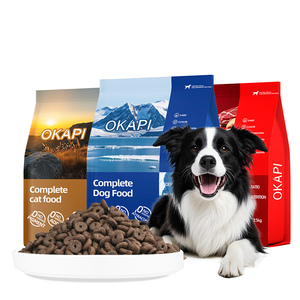
Nutritionally Balanced Complete Cat and Dog Food for Bulk Orders with Private Label Customization
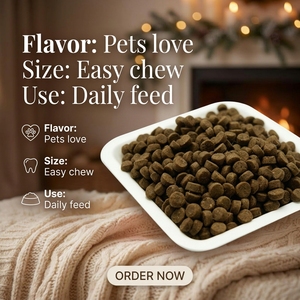
High Protein Chicken Freeze-Dried Coated Crisp Kibble Dog Food Healthy Muscle Gain & Skin Health
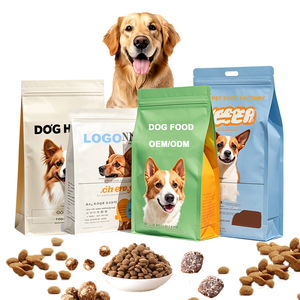
OEM Pet Dog Dry Food Wholesale Direct Sales Price Customization Healthy Delicious Pet Kibble
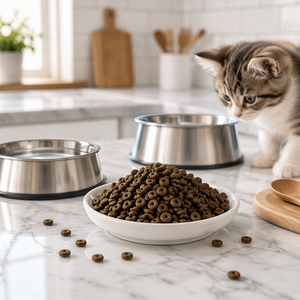
Mailushi Freeze-Dried Grain Free Cat Food Salmon Tuna Beef-Skin Coat Care Digestive Health
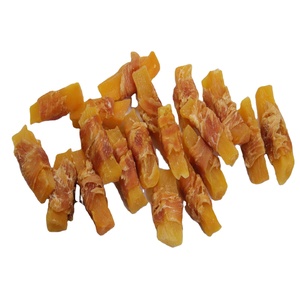
Wholesale Private Brand Natural Healthy Pet Snacks Dry Dog Food Sweet Potato with Chicken Chews
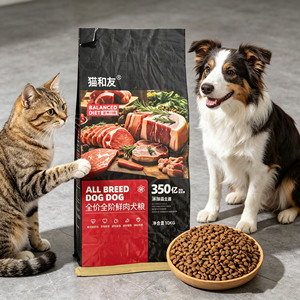
Pet Food Factory Wholesale Low Prices Dry Food For Dogs And Cats, 18%-35% Protein, 10kg Bag
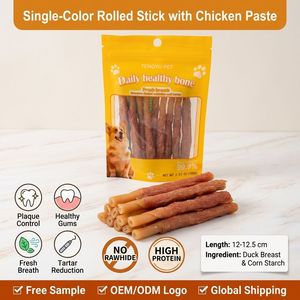
High Protein Duck Paste Coated Twisted Dog Chews Long Lasting Rawhide-Free Functional Pet Treats
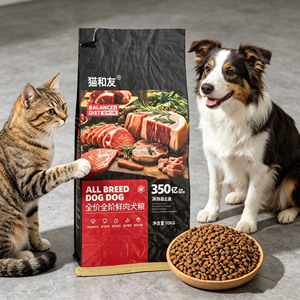
OEM ODM Wholesale Complete & All Life Stages 18%-45% Protein Dry Dog Food & Dry Cat Food 10kg Bag
Industrial Capacity & Quality Management Systems
Operating under family leadership since 2014, bridging European manufacturing protocols across dual facility hubs in Spain and Ukraine.
Certified Quality Standards
Our plants operate under strict compliance with IFS Food v8, HACCP food safety management, GMP+ feed safety assurance, ISO 14001, and EU Regulation (EC) No 767/2009.
In-House Veterinary R&D
Every formulation, nutrient matrix, and batch sample is engineered internally by specialized animal nutritionists and audited by staff veterinarians prior to commercial release.
Dual Plant Resilience
Strategically dual-anchored facilities in Valencia (Spain) and Kyiv (Ukraine) offer geographical redundancy, optimized lead times, and flexible multi-tier logistics across global markets.

Engineering Trust in Companion Animal Nutrition Since 2014
At Boffco Pet, private label manufacturing is not merely a contract packaging service—it is an exercise in absolute biological responsibility. Founded as a family-led operation, our founding directors personally oversee raw material sourcing protocols, extrusion thermal processing parameters, and microbiological safety releases across every product run.
By integrating formulation design, physical pilot trials, retort verification, and complete export documentation (TRACES, CoA, Health Certificates) under a single technical command, we empower commercial brands to scale rapidly with zero compliance risk.
B2B Guide to CE Certification, EU Animal By-Product Directives, & Dog Treat Manufacturing Architecture
A rigorous examination of regulatory frameworks, moisture control physics, pathogen lethality validation, and global procurement dynamics for professional buyers.
1. Decoding European Regulatory Frameworks: CE Mark Nuances & Feed Safety Standards
In global B2B procurement, international buyers frequently inquire about CE Certification for dog treats and pet food products. From a precise legal and regulatory standpoint within the European single market, the CE mark (Conformité Européenne) applies directly to machinery, electronic devices, medical apparatus, and construction goods under specific EU technical harmonization directives. However, when pet treats, dry dog food kibble, and animal nutritional supplements are declared as compliant with European Union safety frameworks, they fall under the rigorous jurisdiction of the European General Food Law (Regulation EC No 178/2002), Regulation (EC) No 767/2009 on the placing on the market and use of feed, and Regulation (EC) No 1069/2009 governing Animal By-Products (ABP) not intended for human consumption.
For international brand owners, retailers, and bulk importers searching for high-standard "CE-level certified" dog treat suppliers, compliance requires verifying that the manufacturing partner operates under dual approval: EU veterinary registration under Regulation (EU) No 142/2011 and high-tier GFSI-recognized quality benchmarks such as IFS Food v8 and GMP+ Feed Safety Assurance. Manufacturing plants situated in Spain and Ukraine must maintain strict segregation of Category 3 animal by-products, ensuring 100% traceability from slaughterhouse origin to finished packaging.
2. Critical Control Points in Treat Processing: Thermal Profiling & Pathogen Kill-Steps
The manufacturing of biological treats—ranging from high-protein freeze-dried chicken bits and duck-coated twisted chews to extruded grain-free kibbles—demands exact thermal processing equations to eliminate enteropathogens such as Salmonella spp., Listeria monocytogenes, and Escherichia coli without destroying thermosensitive micronutrients, natural amino acid chains, and volatile flavor profiles.
During high-moisture extrusion and hot-air dehydration cycles, technical parameters must achieve a validated Thermal Lethality Value ($F_0$ value) equivalent to a minimum core temperature of 90°C sustained for over 30 minutes, or thermal extrusion conditions exceeding 110°C to 140°C under high shear pressure (30 to 50 bar). This process guarantees complete microbiological lethality while inducing controlled starch gelatinization (achieving >90% gelatinization efficiency for enhanced pancreatic amylase digestability).
3. Moisture Management & Water Activity ($a_w$) Kinetics in Shelf-Stable Dog Chews
A primary challenge for private label brand directors is preventing mold growth, lipid oxidation, and structural degradation in long-lasting dog chews and jerky treats during transoceanic shipping. The critical physical variable governing shelf stability is not merely total moisture percentage, but Water Activity ($a_w$).
Water activity measures the energy status of water in a food system. While total moisture content in dehydrated chicken or duck chews may range between 10% and 14%, the internal $a_w$ must be strictly engineered and verified to stay below 0.65 $a_w$ at 25°C. At $a_w \le 0.65$, all bacterial reproduction is completely arrested, and fungal sporulation (including mycotoxin-producing Aspergillus species) is inhibited. Achieving this balance requires precise multi-zone conveyor drying, controlled humidity desiccation, and barrier packaging utilizing high-grade aluminum laminates or ethylene-vinyl alcohol (EVOH) co-extrusions with oxygen scavengers and nitrogen flushing (Modified Atmosphere Packaging - MAP).
Manufacturing Specifications & Quality Metrics Matrix
The table below details the technical parameter benchmarks maintained across our main product categories:
| Product Format Category | Processing Technology | Moisture & Water Activity ($a_w$) | Protein & Crude Fat Profile | Pathogen Inactivation Protocol | Target Shelf Life & Packaging |
|---|---|---|---|---|---|
| Freeze-Dried Coated Crisp Kibble | Dual-stage extrusion + Vacuum Freeze-Drying coating (-40°C sublimation) | Moisture < 8.0% $a_w \le 0.55$ |
Protein: 32% - 42% Fat: 14% - 20% |
Thermal extrusion kill-step (125°C) + Sublimation desiccation | 18-24 Months Triple-layer foil pouch with zip seal & MAP |
| Rawhide-Free Twisted Chews | Plant-based matrix extrusion + Meat paste coating & hot-air curing | Moisture: 11% - 13% $a_w \le 0.63$ |
Protein: 25% - 48% Fat: 2.5% - 5.0% |
Multi-stage tunnel dehydration (85°C for 6 hrs) | 24 Months High-barrier PET/AL/PE custom printed packaging |
| Dehydrated Sweet Potato & Meat Snacks | Automated slicer + Low-temperature slow dehydration | Moisture: 12% - 14% $a_w \le 0.64$ |
Protein: 18% - 30% Fat: 1.5% - 4.0% |
Hot-air pasteurization step (92°C core temp) | 18 Months Resealable pouch with oxygen absorber pack |
| Complete Dry Extruded Kibble | Twin-screw high pressure extrusion + Vacuum fat coating | Moisture < 9.5% $a_w \le 0.60$ |
Protein: 18% - 45% Fat: 8% - 22% |
Pre-conditioner steam conditioning (95°C) + Extruder (135°C) | 18 Months 10kg - 15kg PE bags with micro-perforation options |
Global Procurement & Future Development Trends (2025–2030)
Key market shifts driving product development, ingredient selection, and contract manufacturing strategies for international importers.
1. Shift Toward Rawhide Alternatives
Regulatory scrutiny and consumer awareness surrounding traditional rawhide treats—due to chemical processing residues (hydrogen peroxide, sodium sulfide) and intestinal blockage risks—have accelerated global demand for digestible, rawhide-free twisted chews. Formulations utilizing duck paste coatings, rice flour matrices, and collagen-infused vegetable fibers now command premium retail margins across EU and US markets.
2. Functional Phyto-Supplement Integration
Dog treats are transitioning from simple reward snacks into functional health delivery vehicles. Buyers are specifying active botanical inclusions such as milk thistle (liver support), glucosamine and chondroitin (joint mobility), probiotics (microbiome resilience), and chamomile/L-theanine (calming benefits). Industrial manufacturers must ensure low-temperature coating processes so bioactives retain efficacy after extrusion.
3. Monoprotein & Hypoallergenic Sourcing
With canine adverse food reactions (AFR) on the rise, single-protein formulations (e.g., 100% duck, hydrolysed salmon, or novel proteins like insect meal) are outperforming multi-meat blends. Contract manufacturers require dedicated line cleaning validation protocols to prevent cross-contact and support legal "hypoallergenic" label claims under EU Reg. 767/2009.
4. Freeze-Dried Crisp Coated Extrusion
Combining traditional kibble economic scale with freeze-dried raw nutritional palatability is the fastest-growing super-premium segment. Spraying kibble with freeze-dried chicken or liver powder via vacuum coating drums increases palatability trial scores by over 35% among picky canine breeds without altering base extrusion stability.
Frequently Asked Procurement & Technical Questions
Essential answers for brand managers, quality assurance specialists, and supply chain directors evaluating OEM pet food manufacturing partnerships.
Ready to Launch or Scale Your Private Label Pet Food Line?
Submit your target SKU specifications, target protein analysis, and annual volume estimates. Our technical engineering team will respond with a comprehensive feasibility matrix within 24 business hours.