0%

Why Source Wet Pet Food Pouches and Cans Globally?

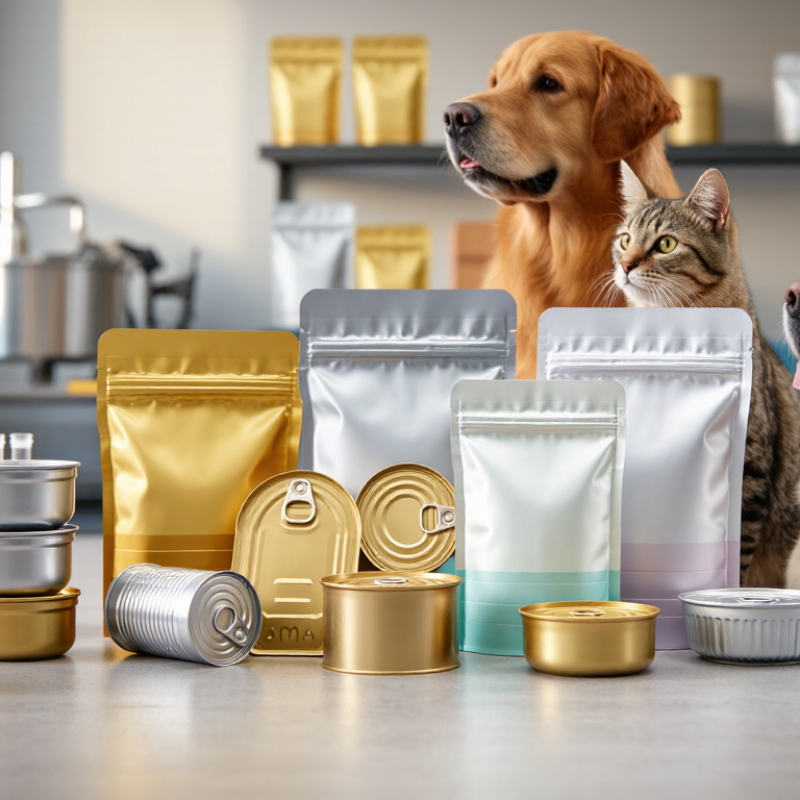
Wet Pet Food Pouches and Cans have become important formats in the international pet-care market. They protect moisture, aroma, and texture during storage and transport. A sealed pouch can offer a soft serving for an older cat. A can can preserve a complete meal through long distribution routes. These details matter to manufacturers, retailers, and pet owners.

Dr. David L. Meeker, a respected pet-food scientist, has stated, “The pet food industry is one of the most highly regulated industries in the world.” His observation highlights why responsible global sourcing requires more than attractive packaging. Suppliers should provide traceable ingredients, consistent filling performance, food-grade materials, and reliable quality records. Production audits, laboratory testing, and transparent documentation also support buyer confidence.

The reasons are practical.

Global sourcing can improve access to specialized films, aluminum, steel, printing systems, and filling technology. It may also reduce supply interruptions when regional capacity changes. However, lower purchase prices do not automatically mean better value. Freight distance, currency movement, packaging waste, and quality failures can quickly change the calculation. A multilayer pouch may save weight, yet its recycling path can be difficult in some markets. A can is widely understood by recycling systems, but it weighs more during transport.

That tension deserves attention. The best sourcing strategy is not simply global. It is qualified, measurable, and flexible. Companies should compare safety, shelf life, carbon impact, logistics, and customer needs before choosing suppliers. Reliable partnerships grow through evidence, not promises.
Why Source Wet Pet Food Pouches and Cans Globally?

Define Wet Pet Food Demand: FEDIAF Reports 139.7M European Pet Homes

Why Source Wet Pet Food Pouches and Cans Globally?

FEDIAF’s 2024 European Facts and Figures reports 139.7 million pet-owning households across Europe. That figure defines a substantial wet pet food audience. Many households need convenient meals, controlled portions, and softer textures for older animals. Pouches suit single servings. Cans support larger households and planned feeding. The demand is practical, not merely fashionable.

FEDIAF also reports Europe’s pet population at approximately 299 million animals. Meanwhile, the 2024 APPA National Pet Owners Survey recorded pets in 82 million U.S. households. These reports show broad ownership, but they do not measure wet food demand perfectly. Pet preferences differ by species, age, climate, and income. A supplier should study local purchasing data before committing to one package size. Small errors become expensive inventory.

Tips: Compare pouch and can sales by region, species, and household size. Check storage conditions before selecting suppliers. Review ingredient specifications, filling accuracy, seal performance, and traceability records. Ask for independent quality documentation. Test packaging during transport, not only on a warehouse shelf. Wet food contains high moisture, so process control matters. That detail is easy to underestimate. FEDIAF data offers a strong market signal, yet real sourcing decisions still require local validation and repeated review.

Map Global Market Scale: APPA Reports Over $60B in U.S. Pet Food Sales

Why source wet pet food pouches and cans globally? The scale begins in the United States. The American Pet Products Association’s 2025 State of the Industry report estimated $65.8 billion in U.S. pet food and treat sales for 2024. That figure exceeds $60 billion and shows how routine pet nutrition has become a major consumer category.

The wider market is larger still. Euromonitor International reported that global pet care retail sales exceeded $150 billion in 2023. Wet food supports this expansion because its texture, moisture, and portion sizes suit different feeding habits.

Pouches can reduce serving waste in small households. Cans can offer sturdy protection during long-distance shipping. These details matter when buyers compare factories across regions.

Packaging is not a simple cost decision. Aluminum, steel, films, seals, transport distances, and local recycling systems can change the final footprint. The Food and Agriculture Organization also highlights the importance of responsible resource use across food supply chains. That requires practical supplier checks, including batch records, ingredient documentation, filling controls, and shelf-life testing.

The numbers are persuasive. Not perfect, though. Report definitions differ, and some estimates combine food with treats or broader pet-care sales. Experienced sourcing teams should verify each figure, inspect production conditions, and test samples before scaling orders. Supplier claims alone are not evidence.

Compare Pouches and Cans by Barrier, Shelf Life, and Format Performance

Why Source Wet Pet Food Pouches and Cans Globally?

When sourcing wet pet food packaging, compare barrier performance before appearance. Both pouches and cans can use retort processing, which supports commercial shelf stability without refrigeration. Cans provide strong protection against oxygen, moisture, and light. Their rigid walls also resist punctures during transport. However, dents can weaken seams, and heavy pallets may increase freight costs.

Pouches are lighter and often use flexible multilayer films. These structures can offer excellent barriers with less packaging weight. Their flat shape improves storage efficiency and may reduce shipping volume. Yet, sharp handling can create tiny punctures that are difficult to notice. Seal quality matters greatly. A pouch with a weak seal may fail before its printed shelf-life date. Cans usually stack well, while pouches can shift or wrinkle during filling and distribution. Neither format wins every test. The better choice depends on recipe acidity, fat content, filling equipment, and target markets.

Tips: Request barrier data, retort validation, seal-strength results, and transit testing from suppliers. Check packages after vibration and compression tests. Review local recycling systems too. A lightweight pouch is not automatically the more sustainable option. End-of-life access can change the result. I would also compare opening ease, serving control, and storage after opening. These details are easy to overlook, but pet owners notice them quickly.

Why Source Wet Pet Food Pouches and Cans Globally? – Compare Pouches and Cans by Barrier, Shelf Life, and Format Performance
Evaluation Dimension Retort Pouches Metal Cans Commercial Implication
Typical Construction Flexible multilayer laminate, commonly combining polyester, aluminum foil or a high-barrier polymer, and a food-contact sealant layer. Rigid steel or aluminum container with a polymeric internal coating and a seamed metal lid. Both are commercially established shelf-stable formats when correctly processed and sealed.
Oxygen Barrier Excellent*
Foil-based structures provide very low oxygen transmission; foil-free structures depend on the selected barrier resin and laminate design.
Excellent
Metal provides an inherently strong barrier to oxygen when the body, coating, and seam remain intact.
Choose the structure according to oxygen sensitivity, formula, closure design, and validated packaging specifications.
Light Barrier Excellent*
Opaque foil laminates block light; transparent or non-foil structures may provide lower protection.
Excellent
Metal blocks light across the visible spectrum.
Both formats can protect color, flavor, and light-sensitive nutrients when the selected structure is opaque.
Moisture Barrier Very Good
Typically strong, but performance depends on the laminate, sealant, and seal integrity.
Excellent
Rigid metal containers provide strong moisture protection when seams and coatings are sound.
Cans offer a more consistently rigid moisture barrier; pouches require strict seal and laminate control.
Typical Unopened Shelf-Life Target Common commercial target: approximately 18–24 months, subject to formula, retort process, laminate, seal quality, and storage conditions. Common commercial target: approximately 18–36 months, subject to formula, retort process, can coating, seam quality, and storage conditions. The printed date must be established through product-specific stability and package-integrity validation.
Thermal Processing Compatibility Very Good
Suitable for retort sterilization, but thin flexible laminates require controlled loading, heating, cooling, and handling.
Excellent
Well established for retort processing and commonly used for low-acid wet foods.
Cans generally provide a broader and more established process window; pouches can deliver faster heat transfer when properly engineered.
Pack Weight and Logistics Excellent
Lightweight and compact when empty; generally reduces packaging material mass and shipping volume per serving.
Moderate
Rigid steel or aluminum adds container weight but supports stable stacking and palletization.
Pouches are attractive for freight-sensitive and portion-oriented programs; cans suit dense, standardized case logistics.
Stacking and Mechanical Protection Good
Space efficient but vulnerable to puncture, abrasion, sharp edges, and compression damage if mishandled.
Excellent
Rigid format provides strong resistance to ordinary compression and handling stresses, although dents can affect integrity.
Cans are generally more forgiving in long distribution chains; pouches need protective secondary packaging.
Portion and Format Flexibility Excellent
Supports single-serve portions, slim profiles, tear notches, spouts, and lightweight travel-oriented formats.
Very Good
Supports a wide range of standard portion sizes and shapes, with strong compatibility with automated filling lines.
Pouches offer more visual and ergonomic flexibility; cans offer mature standardization and broad filling-line availability.
Opening and Serving Experience Easy to tear and light to handle; the flexible body may be harder to empty completely without squeezing or using a utensil. Easy-open ends are widely available; the rigid body is stable during serving but may require a utensil to remove remaining food. Select according to consumer preference, pet size, portion size, and intended use occasion.
Resealability After Opening Standard tear-open pouches are generally not hermetically resealable; some specialty formats include a zipper or closure. Standard cans are generally not resealable; opened product normally requires refrigeration in a separate covered container. For multi-meal use, communicate refrigeration and use-after-opening guidance on the label.
Retail and E-Commerce Performance Lightweight, compact, and visually printable; requires protection against puncture and seal damage during parcel shipment. Highly recognizable and robust in conventional retail; heavier for parcel delivery and more prone to cosmetic dents. Pouches can improve shipping efficiency, while cans often provide stronger physical protection in store handling.
Recycling Considerations Multilayer structures can be difficult to recycle in many existing municipal systems; local infrastructure and material design are decisive. Steel and aluminum are widely recyclable where collection and sorting systems exist; recycling rates vary by market. Evaluate end-of-life infrastructure in each target market rather than relying only on material type.
Best-Fit Global Sourcing Use Case Premium single-serve, lightweight distribution, travel feeding, variety packs, and markets prioritizing compact packaging. Mainstream wet food, larger portions, high-volume distribution, long-established retail channels, and demanding mechanical handling. A dual-format sourcing strategy can cover different price points, channels, serving sizes, and regional logistics needs.
Notes: Shelf-life ranges are typical planning benchmarks, not guaranteed values. Final shelf life depends on recipe acidity and water activity, retort schedule, package dimensions, laminate or metal specifications, seal or seam integrity, warehouse conditions, and applicable regulatory requirements. “Excellent,” “Very Good,” and “Good” are comparative format-level ratings; actual performance must be confirmed through supplier specifications, package testing, distribution trials, and stability studies. An asterisk indicates that pouch performance varies significantly between foil-based and foil-free laminate constructions.

Assess Global Suppliers Against AAFCO, FDA, and FEDIAF Safety Standards

Sourcing wet pet food pouches and cans globally requires more than comparing prices. In supplier reviews, I examine retort records, container seams, batch codes, and ingredient traceability. A swollen pouch or weak can seam can signal serious processing failure. Small details matter.

AAFCO provides model nutritional profiles and labeling guidance, while FDA requirements govern safety, manufacturing controls, and preventive systems in the United States. A supplier should show current hazard analyses, corrective-action records, laboratory results, and evidence of compliant labeling. However, AAFCO alignment alone does not prove product safety. That distinction is often overlooked.

For European distribution, FEDIAF nutritional guidelines help assess life-stage claims and formulation quality. I compare recipes with declared nutrient levels, feeding instructions, and laboratory testing for moisture, protein, fat, minerals, and microbiological risks. Supplier facilities should support lot-level recall simulations and retain representative samples. Clear records matter.

Ask difficult questions.

Global sourcing also requires checking whether the facility’s controls match the destination market, not just its home country. Certificates may be genuine yet outdated, incomplete, or unrelated to the specific production line. I would request recent audit findings, retort validation, packaging specifications, and transport temperature controls. No review is perfect. Even experienced teams can miss a weak assumption, especially when documents look polished.

Balance Sourcing Costs, Trade Logistics, and Packaging-LCA Evidence

Global sourcing of wet pet food pouches and cans requires more than a low factory quotation. Cost, trade logistics, and packaging-LCA evidence must be evaluated together. A cheaper pouch may require longer ocean routes, higher minimum orders, or costly transshipment. A nearby can supplier may reduce freight emissions but increase material costs.

In sourcing reviews, I compare landed cost per kilogram, not unit price alone. The calculation includes duties, port handling, storage, damage rates, and currency exposure. Container loading also matters. Lightweight pouches can improve payload efficiency, while cans may offer stronger stacking performance. Small errors compound. Lead times should reflect port congestion, seasonal demand, and customs documentation.

Packaging evidence needs equal discipline. A pouch usually uses less material, but its multilayer structure can limit recycling in some markets. Steel or aluminum cans may require more production energy, yet established collection systems can improve recovery. Reliable LCA comparisons should use the same product weight, shelf-life assumption, and distribution distance. Supplier data should be checked against bills of materials and independent review where possible. Our early models once favored the lightest format too quickly. We later found that damaged packs and low recycling access changed the result. The evidence is useful, but never perfect.

Why Source Wet Pet Food Pouches and Cans Globally?

Balancing sourcing costs, trade logistics, and packaging-LCA evidence

The chart shows published cradle-to-gate greenhouse-gas-intensity ranges for common packaging materials, expressed as kg CO₂e per kg of material. Flexible pouches can reduce transport weight, while cans may provide strong protection, long shelf life, and established recycling routes. The final choice should combine package mass, recycled content, filling location, transport mode, import duties, and local end-of-life systems rather than relying on material intensity alone.

Sources: Inventory of Carbon & Energy (ICE) Database, Version 3.0; PlasticsEurope Eco-profiles; Smart Freight Centre, GLEC Framework. Indicative material ranges are not supplier-specific product LCAs. Typical freight emissions vary substantially by route and mode: ocean freight is generally far lower per tonne-kilometre than road or air freight.

FAQS

Why is global sourcing for wet pet food packaging attractive?

The United States recorded over $60 billion in pet food and treat sales in 2024. Global pet care sales exceeded $150 billion in 2023. Wet food benefits from convenient portions, moisture, and varied textures. Market definitions differ, so these figures need careful verification.

When should buyers choose pouches instead of cans?

Pouches are lightweight and can use less packaging material. Their flat shape may improve warehouse storage and container loading. They suit smaller portions and can reduce serving waste. However, flexible films may puncture during sharp handling.

When are cans a better option?

Cans provide strong protection from oxygen, moisture, and light. Their rigid walls resist many transport impacts. They usually stack reliably on pallets. Their disadvantages include heavier freight, dents, and possible seam damage.

Do both formats support long shelf life?

Yes, both can use retort processing for shelf-stable products. Actual performance depends on the recipe, filling process, and package seal. Buyers should request shelf-life testing and retort validation. Never rely on printed dates alone.

What packaging tests should suppliers provide?

Request barrier data, seal-strength results, retort records, and transit testing. Inspect samples after vibration and compression tests. Check for tiny pouch punctures and dented can seams. Test before scaling.

How should buyers compare sourcing costs?

Compare landed cost per kilogram, not unit price alone. Include duties, port handling, storage, damage, currency changes, and freight. Minimum orders and transshipment can increase the final cost. A low quotation may become expensive later.

Which format is more environmentally responsible?

Neither format automatically wins. Pouches may use less material but can be difficult to recycle. Metal cans may require more production energy but benefit from established collection systems. Local recycling access changes the result.

What supplier records should be checked before ordering?

Review batch records, ingredient documents, filling controls, material specifications, and shelf-life results. Compare supplier claims with bills of materials. Inspect production conditions where possible. Claims are not evidence.

How can buyers make a reliable life-cycle comparison?

Use the same product weight, shelf-life assumption, and distribution distance. Include packaging losses, damaged units, and recycling access. Compare independent evidence when available. Early models can favor the lightest pack too quickly. The result may change.

Conclusion

The global demand for Wet Pet Food Pouches and Cans is expanding alongside rising pet ownership and growing interest in convenient, nutritious feeding solutions. With 139.7 million pet-owning households reported across Europe and U.S. pet food sales exceeding $60 billion, the market offers substantial opportunities for responsible sourcing. Wet formats can support hydration, palatability, and portion control, making them suitable for diverse consumer preferences and pet needs.

Pouches and cans should be compared by material barrier performance, product protection, shelf life, filling efficiency, storage, and format convenience. Successful international sourcing also requires suppliers to demonstrate consistent quality and alignment with relevant AAFCO, FDA, and FEDIAF safety expectations. Buyers should evaluate total costs, including manufacturing, transportation, customs, warehousing, and potential packaging losses, rather than focusing only on unit price. Finally, packaging decisions should consider credible life-cycle evidence, recyclability, material efficiency, and practical end-of-life conditions in target markets.

Elowen

Elowen

Elowen is a dedicated marketing professional who combines strategic insight, clear communication, and deep knowledge of the company’s products and services. As a regular contributor to the company website, Elowen creates informative, practical, and engaging blog articles that help readers better......