Choosing reliable Functional Dental Chews for Dogs manufacturers requires more than comparing product photos or factory claims. This guide examines ten leading Chinese suppliers through practical purchasing criteria, including ingredient transparency, chew texture, size options, production capacity, and quality-control systems. A dependable manufacturer should explain how each chew supports mechanical plaque removal. It should also provide clear feeding guidance for different breeds and chewing habits.
Real-world evaluation matters. A small dog may need a softer, narrow chew, while a powerful chewer may require a denser design. Ingredients such as plant fibers, poultry, starch, or approved functional additives should be fully declared. Buyers should request batch records, microbiological testing, heavy-metal reports, shelf-life data, and packaging specifications. Factory audits can reveal storage conditions, sanitation routines, and whether production lines are properly separated. Those details often matter more than polished marketing language.
No ranking is perfect. Supplier performance can change with new equipment, staff, or export markets. Therefore, this overview treats the “top 10” as a practical shortlist, not a permanent judgment. Readers should confirm current certifications, sample quality, minimum order quantities, private-label support, and delivery performance before signing a contract. Veterinary input is also valuable, especially when making claims about tartar, breath, or gum health. A chew is not a substitute for brushing or professional dental care. Small details matter. The best manufacturer combines consistent manufacturing with honest communication, traceable materials, and evidence-based product development. Even strong suppliers may have weaknesses, so careful verification remains essential.
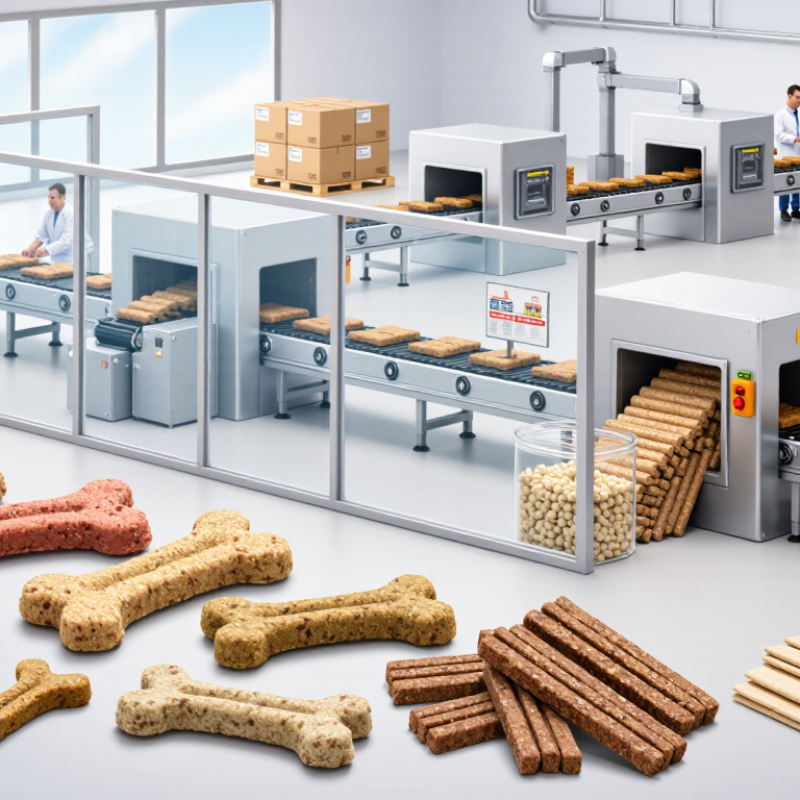
What Functional Dental Chews for Dogs Are and Why They Matter
Functional dental chews are edible treats designed to support daily mouth care in dogs. Their textured surfaces may rub against teeth while chewing, helping reduce soft plaque and trapped food. Some formulas also include approved ingredients for fresher breath or gum support. They are not ordinary snacks with a dental label. Their shape, hardness, calories, and ingredient quality all matter.
Veterinary dental guidance usually treats chews as part of care, not a replacement for brushing. In practice, a suitable chew can make oral hygiene easier for busy owners and more enjoyable for dogs. Choose an appropriate size for the dog’s weight and chewing style. Supervise every session. A chew that breaks into sharp pieces may create choking or digestive risks. Very hard products can also damage teeth, especially in aggressive chewers.
Manufacturers in China often develop functional chews with different textures, proteins, and functional ingredients. Buyers should request ingredient specifications, contaminant testing, durability data, and clear feeding instructions. They should also check whether dental claims are supported by practical evidence. Research quality can vary. Some chews freshen breath without meaningfully reducing plaque. That difference matters.
Watch the dog’s reaction. Loose stools, vomiting, refusal, or gum bleeding require stopping the product and consulting a veterinarian. Dental chews can help, but they are not magic. Regular veterinary examinations remain important, even when the dog’s breath smells better.
| No. | Functional Chew Category | Common Functional Components | Primary Dental Purpose | Typical Texture | Suitable Dog Profile | Key Manufacturing Considerations | Quality and Evidence Check |
|---|---|---|---|---|---|---|---|
| 1 | Dental Sticks | Starch, plant fibers, glycerin, minerals, and approved flavoring agents | Mechanical cleaning of accessible tooth surfaces during chewing | Firm, porous, and moderately flexible | Small, medium, or large dogs when correctly size-matched | Control moisture, density, breakage behavior, shape consistency, and calorie content | Dental claims should be supported by appropriate testing; verify digestibility and microbial safety |
| 2 | High-Fiber Dental Chews | Cellulose, pea fiber, beet fiber, rice bran, or other approved dietary fibers | Increase abrasive contact and support a longer chewing time | Fibrous, rough, and compressible | Dogs needing lower-fat treat options | Balance fiber level with palatability, stool tolerance, chew firmness, and product stability | Confirm crude fiber, moisture, calorie, and digestibility specifications |
| 3 | Enzyme-Supported Chews | Food-grade enzymes such as protease or amylase, combined with a chewable base | Support the breakdown of food residues on the tooth surface | Firm or semi-firm, depending on the base recipe | Adult dogs able to chew safely | Protect enzyme activity from heat, moisture, and unsuitable pH during processing | Test active potency through shelf life and substantiate any enzyme-related claims |
| 4 | Probiotic Dental Chews | Selected probiotic cultures, prebiotic fibers, and a low-moisture chew matrix | Provide oral-support ingredients while the chew delivers mechanical cleaning | Soft to moderately firm | Dogs requiring a palatable daily functional treat | Use compatible processing temperatures and packaging with adequate moisture and oxygen control | Verify viable cell count at the end of shelf life, not only at production |
| 5 | Seaweed or Algae-Containing Chews | Kelp, algae meal, alginate, or other approved marine-derived ingredients | Offer an ingredient associated with oral-care formulations alongside chewing action | Firm, dense, or porous | Adult dogs without dietary restrictions related to marine ingredients | Control iodine, heavy metals, raw-material identity, odor, and batch uniformity | Require marine contaminant testing and accurate ingredient declaration |
| 6 | Herbal-Infused Dental Chews | Pet-safe botanical ingredients such as parsley or peppermint in controlled amounts | Support fresh breath while the physical chew provides abrasion | Soft, semi-firm, or firm | Dogs that accept plant-based flavors | Confirm botanical identity, dosage suitability, flavor acceptance, and contaminant limits | Avoid unsupported disease-prevention claims and verify species-specific safety |
| 7 | Collagen-Based Dental Chews | Collagen peptides, gelatin, or collagen-rich animal-derived materials | Encourage extended chewing and provide a protein-based treat format | Chewy, layered, and gradually softened by saliva | Medium and large dogs when thickness and size are appropriate | Manage raw-material traceability, odor, water activity, toughness, and pathogen control | Check protein source, digestibility, tensile behavior, and foreign-material controls |
| 8 | Plant-Protein Dental Chews | Pea, potato, soy, rice, or other plant proteins with cereal or vegetable fibers | Combine tooth-contact texture with a plant-based protein profile | Dense, baked, extruded, or air-dried | Dogs whose diets permit the selected plant proteins | Optimize protein hydration, extrusion or baking conditions, hardness, and flavor acceptance | Declare allergens clearly and verify nutritional analysis and digestibility |
| 9 | Dental Chews with Mineral Salts | Approved calcium salts, phosphates, zinc compounds, or other regulated mineral ingredients | Provide a functional mineral component with a textured chewing matrix | Firm, chalky, or compressed | Adult dogs requiring controlled treat portions | Maintain uniform mineral dispersion and prevent excessive inclusion levels | Confirm mineral assay, maximum feeding amount, and regulatory compliance |
| 10 | Low-Calorie Dental Chews | High-fiber bases, air incorporation, reduced-fat recipes, and functional flavor systems | Support routine chewing while helping manage daily treat calories | Light, porous, and moderately firm | Overweight-prone or calorie-controlled adult dogs | Control bulk density, breakage, palatability, oxidation, and accurate calorie labeling | Validate metabolizable energy, moisture, shelf life, and recommended daily portion |
FAQS
They are edible treats with textured surfaces. Chewing may rub teeth and reduce soft plaque or trapped food. They are not ordinary snacks.
No. Brushing remains more reliable for reaching different tooth surfaces. Chews support daily care but cannot clean everything. Not magic.
Match the chew with the dog’s weight and chewing style. A small chew may create choking risks. An oversized chew may be difficult to use.
Textured surfaces can encourage longer chewing. Very hard products may damage teeth, especially for aggressive chewers. A chew that cracks sharply is unsafe.
Some formulas include approved mineral ingredients, functional fibers, or breath-support ingredients. Their effects depend on texture, chewing time, and feeding habits. Ingredients alone prove little.
Request ingredient specifications, batch records, testing reports, and feeding instructions. Review mixing, forming, drying, packaging, and storage controls. Sealed ingredient bins matter.
Compare samples for texture, cracking, chewing time, smell, and consistency. Check microbiological testing, moisture levels, declared nutrients, and lot-code traceability. Sales language is not evidence.
Stop if the dog has vomiting, loose stools, refusal, or gum bleeding. Contact a veterinarian promptly. Supervise every session. Dogs can react differently.
Conclusion
This article presents a practical guide to China’s top 10 Functional Dental Chews for Dogs manufacturers, explaining what these products are and why they can support daily oral care. It explores how dental chews may help reduce plaque, control tartar buildup, freshen breath, and encourage chewing, while also considering differences in shapes, textures, formulas, and functional ingredients. The comparison focuses on product suitability, manufacturing capabilities, customization options, and consistency rather than brand promotion.
The article also examines essential manufacturing standards, ingredient control, safety testing, traceability, hygiene management, and quality-control procedures. It explains how buyers can assess a reliable Chinese manufacturer by reviewing production facilities, testing documentation, product specifications, packaging options, communication efficiency, and experience with international requirements. By combining product knowledge with a structured supplier-evaluation process, readers can make more informed decisions when sourcing safe, effective, and consistent Functional Dental Chews for Dogs.