Choosing a China Best Dog Training Treats Manufacturing Supplier requires more than comparing prices. It requires evidence, process control, and practical knowledge of canine nutrition. APPA’s 2024 State of the Industry report valued United States pet industry spending at approximately $152 billion. That figure reflects strong demand for convenient, premium, and functional pet products. Euromonitor International also identifies health-focused pet care as a continuing market direction.
Dog Training Treats Manufacturing should connect product design with real training conditions. A trainer may need dozens of small rewards during one session. Each piece should be easy to carry, quick to chew, and consistent in size. Excessive fat, unclear ingredients, or crumbly textures can weaken user confidence. They can also make portion control difficult.
Dr. Lisa M. Freeman, a veterinary nutritionist at Tufts University, advises, “Treats should make up no more than 10% of your pet’s daily calorie intake.” This principle should influence formulation, labeling, and serving guidance. A responsible supplier should provide ingredient specifications, batch records, allergen controls, and appropriate microbiological testing. Independent verification is valuable.
Factory photographs are not enough. Buyers should examine traceability, drying temperatures, moisture targets, and packaging integrity. That sounds basic. It is often overlooked.
A strong China supplier can offer private labeling, flexible shapes, and export-ready documentation. However, low cost alone is a weak purchasing argument. Manufacturing claims require inspection and testing. Some product choices may also need revision after palatability trials. That is normal. Reliable Dog Training Treats Manufacturing improves through measured feedback, transparent records, and careful attention to dogs, trainers, and responsible owners.
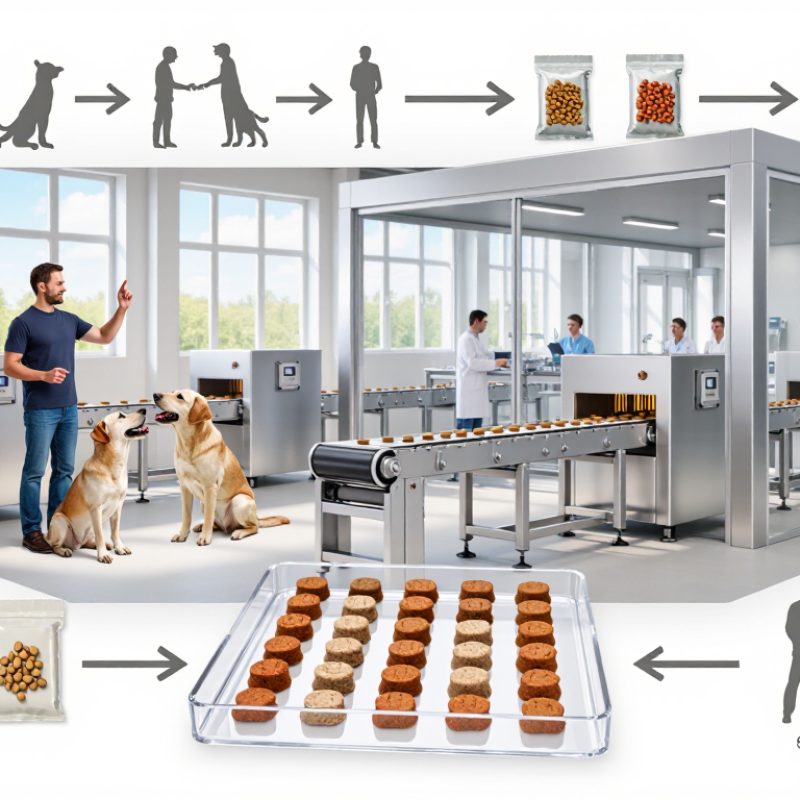
China Best Dog Training Treats Manufacturing Supplier
A China-based supplier can be the best choice when quality systems are visible, repeatable, and independently checked. According to the American Pet Products Association’s 2024 report, U.S. pet industry spending reached $152.1 billion. Training treats benefit from this demand, but buyers now expect safer ingredients and consistent performance.
Reliable factories provide ingredient specifications, allergen controls, moisture testing, and batch traceability. They should share certificates of analysis for each production lot. HACCP-based procedures and ISO 22000 systems can strengthen food safety management. However, certification alone is not enough. Factory records, laboratory results, and corrective actions deserve careful review. The supplier should also explain sourcing, shelf-life testing, packaging protection, and export experience. A polished showroom proves little. Production evidence matters more.
Tips: Request three recent batch records, not one sample. Confirm testing with an independent laboratory when possible. Check whether the factory can reproduce the same size, texture, and aroma across several orders. Clear communication is valuable, especially for custom formulas and private packaging. Yet cheaper pricing may hide weaker controls or unstable ingredients. I would compare total risk, not just unit cost. No supplier is perfect. Even strong factories need regular audits and honest feedback. According to the Global Pet Expo market discussions, functional and premium pet products continue gaining attention, making transparent quality claims increasingly important.
Choosing the right dog training treats begins with ingredient discipline, not attractive packaging. High-quality recipes usually place named animal proteins, such as chicken, beef, or fish, near the top of the ingredient list. Oats, rice, or potatoes can provide structure and quick energy. Moisture also matters. A soft, pea-sized treat is easier to chew during repeated commands. However, “natural” does not automatically mean nutritionally complete.
The World Small Animal Veterinary Association recommends keeping treats below 10% of a dog’s daily calorie intake. A 10-kilogram adult dog may need roughly 400–600 calories daily, depending on age, activity, and body condition. Therefore, training rewards should often contain only 3–8 calories each. The calculation is simple. The application is not. AAFCO nutrient profiles support complete diets, but many treats are complementary products rather than balanced meals. FEDIAF’s 2024 nutritional guidelines also stress life-stage differences, especially for puppies and growing dogs.
Manufacturers should test protein, fat, moisture, ash, fiber, and calorie values through reliable laboratory procedures. Excess salt, sugar, and vague animal derivatives deserve careful review. Preservatives must follow applicable food-safety requirements. Clean handling is essential, especially for soft treats with higher moisture. In practical production, batch consistency can fail when meat moisture changes seasonally. That weakness should be measured, not hidden. A stronger supplier records raw-material origins, validates microbiological safety, and checks finished products against declared nutrition values. Small details protect training results.
| Data Dimension | Key Ingredient or Nutritional Parameter | Typical Specification or Target | Functional Purpose | Quality and Compliance Considerations |
|---|---|---|---|---|
| Primary Protein | Chicken, beef, turkey, lamb, fish, or plant-based protein | Usually the first-listed ingredient; commonly selected for high palatability and digestibility | Supports palatability and contributes amino acids for muscle maintenance | The species and source should be clearly identified. Protein ingredients should be tested for microbiological safety and allergen-control requirements. |
| Animal Organ Ingredients | Liver, heart, or other approved edible organs | Used in controlled amounts as a flavor-enhancing ingredient | Provides strong aroma and naturally occurring nutrients such as vitamin A, iron, and copper | Excessive liver inclusion can provide too much vitamin A; formulation should remain within applicable nutritional and safety limits. |
| Fish-Based Ingredients | Fish meal, fish hydrolysate, or purified fish oil | Added according to the product formula and desired omega-3 contribution | Contributes protein; fish oil can provide EPA and DHA | Oxidation control, freshness testing, and heavy-metal monitoring are important for marine-derived ingredients. |
| Carbohydrate Sources | Rice, oats, potato, sweet potato, peas, or tapioca | Selected to achieve the required texture, structure, and energy density | Provides energy and supports treat binding or shaping | The ingredient should be properly cooked or processed where necessary. Grain-free claims should not imply superior nutrition without supporting evidence. |
| Binding Ingredients | Gelatin, starches, plant fibers, or egg products | Use at the minimum effective level needed for a stable training-treat shape | Improves cohesion, handling, and resistance to crumbling | Ingredients must be suitable for dogs and declared according to the labeling rules of the target market. |
| Humectants | Glycerin or other permitted moisture-retention ingredients | Formulated to maintain a soft, chewy texture without excessive free moisture | Helps control texture and water activity | Water activity should be validated for the finished product because moisture percentage alone does not determine microbial stability. |
| Crude Protein | Protein declared on the guaranteed analysis | Common commercial training treats may contain approximately 15%–35% crude protein as-fed, depending on moisture and formulation | Indicates the overall protein contribution of the product | This is a typical product range, not a universal legal requirement. Protein quality and digestibility are not determined by the percentage alone. |
| Crude Fat | Animal fat, poultry fat, plant oil, or fish oil | Often approximately 5%–20% crude fat as-fed, depending on treat type and energy target | Improves flavor and supplies concentrated energy | Fat quality, peroxide value, and rancidity control should be monitored. High-fat treats may require smaller serving portions. |
| Crude Fiber | Vegetable fiber, cellulose, beet pulp, or other approved fiber sources | Often approximately 1%–8% crude fiber as-fed for conventional training treats | Supports texture and may contribute to satiety and normal intestinal function | Very high fiber can reduce palatability or digestible energy and should be appropriate for the intended product type. |
| Moisture | Water content of the finished treat | Soft treats commonly contain more moisture than baked or dehydrated treats; the final value must be verified by laboratory testing | Determines texture, shelf stability, and part of the as-fed nutrient calculation | Moisture should be evaluated together with water activity, packaging performance, and declared shelf life. |
| Metabolizable Energy | Calories per treat or per 100 g | Must be calculated or measured and should be clearly stated for portion control | Helps owners keep treats within the dog’s daily energy allowance | A commonly used veterinary feeding principle is to keep treats and other extras to no more than about 10% of daily calories, unless professionally advised otherwise. |
| Calcium and Phosphorus | Calcium, phosphorus, and their ratio | For reference, adult-maintenance complete-diet profiles commonly use minimums of 0.50% calcium and 0.40% phosphorus on a dry-matter basis under AAFCO nutrient profiles | Supports bones, teeth, and normal mineral metabolism | Training treats are generally supplemental products and are not automatically required to meet complete-and-balanced food profiles. Calcium-to-phosphorus balance should still be considered. |
| Vitamins and Minerals | Added vitamin and mineral premix, when needed | Added only according to the formulation objective and applicable maximum or minimum limits | Supports nutritional consistency when the product is intended to provide specific nutrients | Fortification should be based on laboratory analysis and regulatory requirements; excessive supplementation can create safety risks. |
| Preservation System | Approved antioxidants, packaging control, or validated thermal processing | Selected according to moisture level, fat content, water activity, and intended shelf life | Helps control oxidation and spoilage | All preservatives and antioxidants must be permitted in the destination market and accurately declared on the label. |
| Microbiological Safety | Salmonella, pathogenic bacteria, yeast, and mold controls | Finished products should meet the microbiological specifications established for the destination market and product category | Protects animal health and reduces cross-contamination risk in households | A documented hazard-control program, validated processing step, environmental monitoring, and batch testing are recommended. |
| Contaminant Control | Heavy metals, mycotoxins, pesticide residues, and veterinary-drug residues | Must remain within applicable legal limits for the destination country or region | Supports long-term safety and regulatory compliance | Risk-based supplier qualification and periodic laboratory testing are important, especially for animal, fish, grain, and plant ingredients. |
| Allergen and Species Declaration | Animal species, grains, dairy, egg, soy, and other relevant allergens | Ingredient identity should be accurate, specific, and consistent with the formula | Allows owners to select treats suitable for individual dietary needs | Shared-equipment controls and truthful “free-from” claims are necessary where allergen or species separation is promoted. |
| Product Labeling | Product name, ingredient list, guaranteed analysis, calorie information, feeding directions, net quantity, and manufacturer or distributor details | Label content must follow the legal requirements of the sales market | Provides traceability and supports responsible feeding | Training treats should generally be identified as intermittent or supplemental feeding products unless they have been formulated and substantiated as complete and balanced. |
Note: The composition ranges shown above are general industry-oriented examples rather than universal legal specifications. Final requirements depend on the recipe, processing method, product moisture level, intended life stage, and destination-market regulations. Nutrient percentages should be interpreted according to whether they are reported on an as-fed or dry-matter basis.
A dependable dog training treat supplier begins with controlled ingredient sourcing. Each shipment should receive identity checks, freshness review, and documented approval. We inspect color, odor, texture, and packaging condition before production. Ingredients are stored on raised pallets, away from moisture and heat.
The process normally includes grinding, mixing, forming, baking, or gentle dehydration. Operators record time, temperature, batch weight, and equipment settings. These details help maintain a consistent bite size for training use. After processing, trained staff inspect samples for cracks, uneven color, and excessive hardness. Moisture testing supports shelf-life control, while microbiological testing checks product safety. Metal detection and sealed packaging add another protection layer. Traceability records should connect every finished bag with its ingredient lots and production date.
Tips: Choose a supplier that can provide batch records, test reports, and clear corrective actions. Ask how rejected products are isolated. Small process changes matter. A supplier may have excellent equipment but weak operator training. That gap deserves honest review. No quality system is flawless; temperature sensors can drift, and sampling can miss defects. Reliable manufacturers therefore calibrate instruments, retain reference samples, and investigate complaints instead of hiding them. Regular audits, hygiene training, and documented sanitation routines strengthen daily control.
Choosing a China best dog training treats manufacturing supplier involves more than comparing prices. A reliable supplier should support private label programs with clear specifications, stable production, and traceable quality records. Experienced manufacturers can help adjust protein sources, treat size, texture, and calorie levels for different training needs. Small treats matter.
Customization often begins with a practical sample. Buyers can request soft cubes, crunchy bites, or limited-ingredient recipes. The supplier should explain ingredient functions, moisture targets, shelf-life testing, and batch controls. Certificates of analysis and production records can support responsible quality review. A first sample may not be perfect. That is useful feedback, not failure. Recipe changes should be documented and tested again before larger production.
Packaging options should protect freshness and communicate product details clearly. Custom pouches, resealable bags, cartons, and bulk formats may suit different sales channels. Packaging teams can adapt dimensions, finishes, labels, and artwork to a private label identity. Materials should match storage conditions and applicable market requirements. Important information includes ingredients, feeding guidance, net weight, lot coding, and expiration details. Good suppliers review print proofs carefully. Small errors can become expensive. Clear communication, realistic lead times, and pre-shipment inspections make the process more dependable. A flexible supplier may also offer mixed packaging tests, helping buyers evaluate shelf appeal without committing to excessive inventory.
Private-label production, product customization, and flexible packaging options are supported by continued growth in the pet-care market. The chart below shows total U.S. pet industry expenditures as market context for dog treat suppliers.
Source: American Pet Products Association (APPA), U.S. Pet Industry Expenditures, 2019–2024. Values are presented in billions of U.S. dollars.
Selecting a dog training treats manufacturing supplier in China requires more than comparing price lists. Begin with ingredient transparency, production experience, and documented quality controls. Ask for a current ingredient specification, allergen statement, and certificate of analysis for each recipe. The documents should match the actual product.
Request samples from different production batches. Check odor, texture, size consistency, and package sealing. A good treat should break cleanly during repeated training sessions. It should not crumble into powder inside the pouch. Small details matter. Review the factory’s traceability system, sanitation procedures, and storage conditions. Temperature and humidity can affect moisture-sensitive treats.
A factory audit, either in person or through an independent inspector, can reveal practical weaknesses. Look at raw material labels, pest-control records, metal detection, and finished-goods storage. Ask how the supplier handles complaints and batch recalls. Their answer should include dates, responsible staff, and written records. Request production samples before approving a large order. Confirm minimum order quantities, lead times, packaging options, and export documentation in writing.
Do not rely on polished factory photos. They prove very little. A supplier may communicate well but still miss deadlines. Another may offer excellent samples but lack stable batch control. This is where careful comparison becomes important. Score each supplier against the same criteria, then revisit the score after receiving trial production. That extra review may expose assumptions you did not notice initially.
Look for visible quality systems, stable production, and independent testing. The supplier should provide ingredient specifications, allergen controls, and batch traceability. Factory records matter more than polished photos.
Request ingredient specifications, allergen statements, and certificates of analysis. Ask for three recent batch records, not one sample. The documents should match the actual treats.
Compare samples from different production batches. Check size, odor, texture, aroma, and moisture. A good treat should break cleanly during training. It should not become powder inside the pouch.
Suppliers may adjust protein sources, treat size, texture, and calorie levels. Possible formats include soft cubes and crunchy bites. Small treats matter.
Packaging should protect freshness and suit storage conditions. Options may include resealable bags, pouches, cartons, and bulk formats. Check ingredients, feeding guidance, net weight, lot codes, and expiration details. Small printing errors can become expensive.
No. Certification supports a review, but it does not prove daily performance. Examine laboratory results, factory records, sanitation procedures, and corrective actions. I would not trust certificates without matching production evidence.
Use an on-site audit or an independent inspection when possible. Review raw material labels, pest-control records, metal detection, and storage areas. Temperature and humidity can affect moisture-sensitive treats. Photos prove little.
Confirm minimum order quantities, lead times, packaging options, and export documents in writing. Request trial production samples before approving volume manufacturing. Ask how complaints and recalls are recorded. A supplier may communicate well yet still miss deadlines.
Choosing a reliable China-based dog training treats supplier can help businesses achieve consistent quality, competitive pricing, and flexible production capacity. A professional Dog Training Treats Manufacturing partner should use safe, nutritious ingredients, including quality proteins, digestible carbohydrates, and carefully selected vitamins or minerals. Recipes should support training needs by offering suitable sizes, textures, flavors, and calorie levels. Strict quality control is also essential, covering raw material inspection, hygienic processing, batch testing, traceability, and secure storage throughout the manufacturing process.
The right supplier should provide private label services, customized recipes, varied shapes and sizes, and packaging solutions that protect freshness while matching market positioning. Buyers should evaluate production experience, food safety systems, technical capabilities, minimum order quantities, lead times, communication, and sample development services before making a decision. A trustworthy manufacturing partner will clearly explain its standards, provide transparent documentation, and maintain stable quality from the first trial order to long-term production.